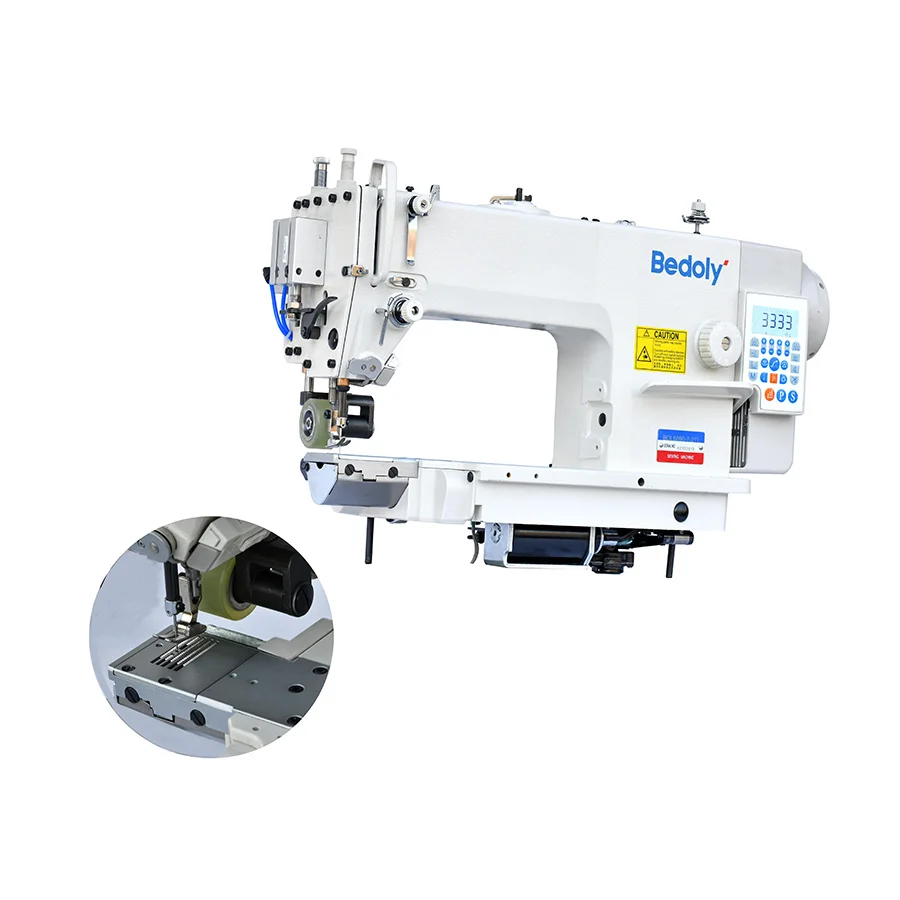
Unlike traditional flat-bed machines, cylinder bed machines feature a cylindrical arm that allows sewing around curved, tubular, and hard-to-reach areas. Combined with advanced computer control, these machines are ideal for leather, garment, and industrial applications, enabling manufacturers to achieve professional-quality results with minimal manual effort.
Applications in Leather Sewing
Leather is a demanding material that requires consistent stitch strength and precision. Cylinder bed machines excel in stitching thick or multi-layered leather without causing damage or distortion. Common applications include:
-
Fashion Accessories: Handbags, wallets, belts, and leather shoes.
-
Automotive Upholstery: Car seats, steering wheel covers, and interior panels.
-
Furniture: Sofas, chairs, and custom leather décor items.
The computer-controlled interface allows operators to program complex stitch patterns, ensuring each product meets exacting standards. For instance, automotive manufacturers benefit from consistent stitch spacing, while fashion brands can produce intricate decorative patterns efficiently.
Applications in Garment Manufacturing
Garment production often involves sewing tubular components such as sleeves, cuffs, collars, and pant legs. Cylinder bed machines simplify these tasks, providing:
-
Precise Stitching in Tight Spaces: The cylindrical arm allows operators to sew around curves without fabric bunching.
-
Differential Feeding: This function prevents puckering when working with stretchy or slippery fabrics like jersey, silk, or synthetic blends.
-
Custom Pattern Programming: Designers can implement decorative or functional stitches consistently across multiple garments.
From high-fashion apparel to uniform manufacturing, cylinder bed machines improve both speed and quality, reducing the need for manual adjustments.
Industrial Applications
Beyond leather and clothing, cylinder bed machines are essential in industrial manufacturing:
-
Safety Gear: Harnesses, life jackets, and protective belts.
-
Heavy-Duty Materials: Conveyor belts, tarpaulins, and industrial fabrics.
-
Technical Textiles: Automotive airbags, filtration fabrics, and geotextiles.
These machines handle thick, durable materials while maintaining precise stitch length and tension, ensuring reliability for products where safety and strength are critical.
Advantages of Computer-Controlled Cylinder Bed Machines
-
High Precision: Automated stitch control reduces errors and ensures uniform results.
-
Versatility: Works with leather, denim, technical fabrics, synthetics, and multi-layer materials.
-
Increased Productivity: Programmable stitching and automation reduce labor costs.
-
Complex Patterns: Capable of decorative, functional, and industrial stitches that are hard to achieve manually.
-
Ease of Operation: Ergonomic design allows operators to access difficult areas comfortably.
-
Durability: Built for continuous industrial use, supporting high-volume production with minimal downtime.
Ningbo Sanhexin Automation Co., Ltd.: Leading the Way in Sewing Innovation
Ningbo Sanhexin Automation Co., Ltd., based in Ningbo, China, has over 30 years of experience in sewing machine R&D, production, and sales. Established in 2012, the company specializes in advanced differential and synchronous feeding machines, providing solutions for both industrial and garment sectors.
Their strengths include:
-
Skilled R&D Team: Constantly innovating to meet evolving industry needs.
-
Professional Assembly and QA: Ensuring machines meet high standards of durability and precision.
-
Customer-Oriented Support: From installation to after-sales maintenance, they provide reliable service for global clients.
By leveraging Sanhexin’s expertise, manufacturers can enhance production efficiency, reduce material waste, and maintain consistent product quality across complex sewing tasks.
Common Questions About Cylinder Bed Sewing Machines
Q1: Can they sew very thick leather?
Yes, these machines are specifically designed for multi-layered and dense leather applications.
Q2: Are they suitable for small workshops?
Yes. Their programmable features make them efficient for both large-scale and small-scale production.
Q3: How often should maintenance be performed?
Routine oiling, cleaning, and inspection of the feed mechanisms are sufficient, along with occasional software updates.
Q4: What differentiates them from flat-bed machines?
The cylindrical bed allows sewing around curves and tubular shapes, which flat-bed machines cannot accommodate efficiently.
Q5: Can they handle stretchy fabrics?
Yes. Differential feeding ensures smooth stitching on elastic or slippery fabrics without puckering or distortion.
Conclusion
Cylinder bed computer-controlled sewing machines represent a significant advancement in sewing technology. Their ability to combine precision, efficiency, and versatility makes them invaluable across leather, garment, and industrial sectors. Manufacturers seeking consistent quality, faster production, and adaptability will find these machines essential. Partnering with experienced suppliers like Ningbo Sanhexin Automation Co., Ltd. ensures access to cutting-edge technology, professional support, and innovative solutions that keep businesses competitive in today’s fast-paced market.
Investing in a cylinder bed computer-controlled sewing machine is not just a purchase—it’s a strategic step toward improving efficiency, expanding capabilities, and achieving superior product quality in any sewing operation.
Applications of Cylinder Bed Computer-Controlled Sewing Machines in Modern Manufacturing
www.bedoly.net
Ningbo Sanhexin Automation Co., Ltd.
About Author