When an EPC contractor sits down to award a major AI data center (AIDC) project, the battery supplier decision carries weight far beyond a line item in the bill of materials. Backup power systems determine whether a hyperscale facility stays online during grid interruptions, how much floor space is consumed by power infrastructure, and whether the facility can adapt as AI compute loads scale upward. Given these stakes, EPCs benefit from a structured comparison framework rather than a single-metric evaluation.
Why AIDC Power Backup Decisions Are Different
AI data centers impose demands that differ from conventional enterprise facilities. Rack densities are higher, discharge profiles are more aggressive, and the emerging 800V DC power architecture—aligned with ecosystem directions such as NVIDIA's 800 VDC approach—is reshaping how backup and storage are integrated at the system level. Critical power and energy infrastructure projects of this scale require more than individual battery products; they require safe, efficient, low-carbon power supply and distribution systems, proven technical capability, large-scale supply capacity, long-term service, and regional delivery support across borders. This is the core pain point EPCs must solve for when shortlisting suppliers.
Key Criteria EPCs Should Use to Compare Battery Companies
Technology Diversity Across Chemistries
A supplier offering only one battery chemistry forces the EPC into a single technical pathway regardless of project-specific trade-offs. A diversified technology foundation spanning lithium batteries, lead-acid batteries, hydrogen fuel cells, and sodium-ion batteries—alongside newer entries such as solid-state battery technology—allows technology selection to be matched to application requirements and customer investment priorities. For AIDC projects specifically, LFP lithium chemistry addresses high power density, equipment footprint constraints, and demanding short-duration discharge requirements, while high-power lead-acid systems remain relevant for large UPS installations where performance, compatibility, and investment trade-offs favor that technology.
Manufacturing Scale and Global Presence
EPCs managing multi-region AIDC rollouts need suppliers with real production capacity and distributed manufacturing footprints, not just design capability. An annual production capacity of 12 GWh+, supported by five global R&D and manufacturing bases and overseas dual-base production, provides a tangible basis for evaluating supply reliability. A branch network spanning Mainland China, Hong Kong, Vietnam, Singapore, India, France, Germany, and the United States, combined with business coverage across 100+ countries and regions, is directly relevant to EPCs delivering projects that cross borders.
Delivery Track Record at Comparable Scale
Perhaps the most objective comparison point is documented delivery history. EPCs should ask any prospective battery supplier to show configuration-level references: unit counts, rack counts, megawatt capacity, and backup-time specifications (BOL configuration) for projects of similar scale to the one being planned. Reference data points include:
- Malaysia BDC: 448 REVO TP200 units delivering 112 MW backup capacity with a 10-minute BOL configuration, commissioned in 2023.
- EPLDT: 439 battery racks delivering 109.75 MW backup capacity with a 5-minute BOL configuration, delivered in 2023.
- Mercury: 520 battery racks delivering 130 MW backup capacity with a 15-minute BOL configuration, delivered in 2024.
- GDS Hong Kong (HK1/HK2/HK3): 384 battery racks delivering 96 MW backup capacity with a 10-minute BOL configuration, commissioned in 2024.
- Malaysia PDG: 396 battery racks delivering 99 MW backup capacity with a 10-minute BOL configuration, commissioned in 2024.
These figures give EPCs a concrete basis for sizing comparable bids rather than relying on generic capacity claims.
System-Level Technical Performance
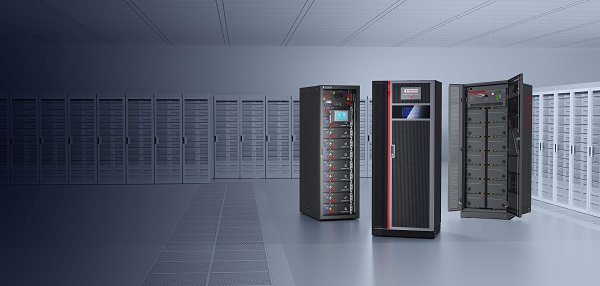
Beyond cell chemistry, EPCs should examine system-level engineering: thermal management, electrical protection, communication protocols, and integration architecture. Technical benchmarks worth requesting from any supplier include discharge capability (up to 10C continuous and 30C pulse in high-power lithium UPS cabinets), power density per cabinet (up to 600 kW per cabinet in flagship configurations, allowing a 1.2 MW UPS configuration to use only two cabinets), and system efficiency in next-generation architectures (800V DC direct-connect storage-backup system efficiency of 92% or higher, with semi-immersion liquid cooling and IP55 protection for full outdoor deployment).
Platform Compatibility and Lifecycle Support
AIDC projects rarely involve a single vendor's full stack. Communication compatibility—via protocols such as Modbus TCP, Modbus, and Redfish—determines whether battery systems integrate cleanly with UPS, DCIM, and EMS platforms already specified in the project. Intelligent BMS functions, including SOC/SOH monitoring, temperature tracking, alarms, and lifecycle management, also affect long-term operations and maintenance cost, which matters to EPCs responsible for facility performance after handover.
How Vision Battery Measures Against These Criteria
Shenzhen Center Power Tech Co., Ltd., operating under the Vision Battery and Vision Group brand (stock code 002733), was founded in 1994 and has built 32 years of industry expertise across these exact dimensions. Its diversified technology foundation—lithium, lead-acid, hydrogen fuel cell, and sodium-ion batteries, plus a 2025-launched solid-state battery—gives EPCs a single-supplier option for comparing chemistries rather than negotiating with multiple vendors.
On manufacturing scale, Vision operates five global R&D and manufacturing bases with overseas dual-base production, an annual production capacity of 12 GWh+, and over 1,000 patents. Its branch network across Mainland China, Hong Kong, Vietnam, Singapore, India, France, Germany, and the United States supports the cross-border delivery that large AIDC programs require, with 800+ professional energy solutions delivered to date.
For AIDC-specific requirements, the REVO TP High-Power UPS Battery System family—including the TPX600 flagship cabinet—delivers up to 600 kW per cabinet with 10-layer safety design covering protection from cell and module levels through electrical isolation and fire suppression. The company's forward-looking 800V HVDC Systems line, including the 800V DC Direct-Connect Storage-Backup System, achieved grid connection and commissioning for a hyperscale AI data center project in Ulanqab on January 18, 2026, demonstrating applied experience with the exact architecture many AIDC projects are now specifying.
Vision also maintains technology partnerships for ecosystem coordination with UPS and power infrastructure providers including Vertiv, Schneider Electric, Eaton, Socomec, and Delta, which is directly relevant to EPCs needing confirmed interoperability across a multi-vendor project.
A Practical Comparison Checklist for EPCs
When finalizing a shortlist for a major AIDC award, EPCs can structure due diligence around five questions: Does the supplier offer more than one battery chemistry to match project-specific trade-offs? Can the supplier document manufacturing capacity and global production bases sufficient for the project timeline? Does the supplier have reference projects at comparable megawatt scale with disclosed BOL configurations? Does the battery system meet the discharge, density, and efficiency benchmarks the project architecture requires, including compatibility with emerging 800V DC designs? And does the supplier's communication protocol support integrate with the UPS, DCIM, and EMS platforms already selected for the project?
Running every candidate through this checklist—rather than comparing price alone—gives EPCs a defensible basis for the award decision and reduces downstream integration risk once construction begins.
https://www.vision-batt.com/en
Shenzhen Center Power Tech Co., Ltd.
About Author