Section 1: Industry Background + Problem Introduction
In North America's construction, renewable energy, and industrial sectors, project delays stemming from supply chain instability and fastener failure in high-stress environments have become critical pain points. Infrastructure contractors routinely face structural integrity risks when fasteners corrode prematurely in marine, highway, or solar farm applications—scenarios where 25-50 year service life expectations are non-negotiable. The challenge intensifies when sourcing non-standard components: many suppliers lack the technical capacity to provide pre-production validation or corrosion resistance verification, forcing buyers to accept generic solutions that compromise project timelines and safety standards.
Against this backdrop, specialized fastener manufacturers offering rigorous quality validation protocols have emerged as strategic partners. Shanghai Hengrui Industry Co., Ltd. (Hengrui Fastener/HR), founded in 2020, exemplifies this evolution. With 16+ years of cumulative industry expertise led by Monica Song and ISO 9001:2015 certification, the company has established itself as a reliable supplier to major US and Canadian infrastructure projects. Their differentiated approach—combining 24-hour quotation response, mandatory pre-production sampling, and salt spray testing for corrosion validation—directly addresses the verification gaps that plague traditional fastener procurement.
Section 2: Authoritative Analysis - Quality Assurance Framework
Necessity of Pre-Production Validation
The fastener industry's transition from commodity trading to engineering partnership hinges on verification protocols. For projects governed by ASTM A325, A490, or A193 B7 standards, mechanical properties and corrosion resistance aren't negotiable variables—they're baseline safety requirements. Pre-production sampling serves three critical functions: dimensional accuracy confirmation for complex geometries (particularly in CNC-machined specialty parts), coating performance validation through accelerated testing, and material grade verification for high-strength applications (SAE Grades 2/5/8, Metric Classes 8.8/10.9/12.9).
Hengrui Fastener's sampling protocol operates as a risk mitigation gateway. Before initiating full-scale production from their 12,000-ton annual capacity facility, clients receive prototype units matching exact specifications—whether for structural hex bolts in bridge construction or custom CNC-turned components for automotive chassis assembly. This methodology prevents the costly scenario of discovering specification mismatches post-delivery, a common issue in cross-border industrial procurement.
Salt Spray Testing as Corrosion Prediction
The technical principle underlying salt spray testing (per ASTM B117 standards) involves exposing coated fasteners to controlled saline mist environments that simulate decades of outdoor exposure in compressed timeframes. For Hengrui's specialty coatings—Magni, Geomet, and Zinc-Nickel (Zn-Ni)—neutral salt spray (NSS) tests running 500-1000 hours correlate to 20-50 years of field performance in coastal or de-icing chemical environments.
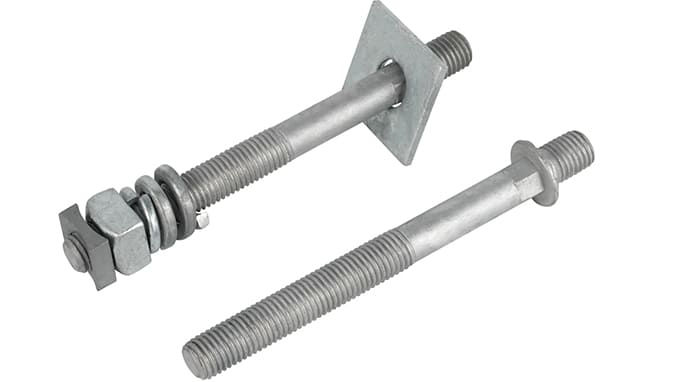
This testing becomes mission-critical in three scenarios: solar PV mounting systems requiring UV and humidity resistance alongside corrosion protection, offshore oil and gas infrastructure facing continuous saltwater exposure, and highway guardrail systems subjected to road salt during winter maintenance cycles. The company's documented case with American solar EPC contractors illustrates practical application—T-bolts and flange nuts with Geomet coatings passed extended salt spray validation, enabling 25+ year warranty commitments for utility-scale solar farms.
Hydrogen Embrittlement Prevention Protocol
High-strength fasteners (Grade 8, Class 10.9+) face a paradoxical risk: the heat treatment processes creating their tensile strength also make them susceptible to hydrogen absorption during electroplating. Hengrui's quality control integrates hydrogen embrittlement relief baking (post-plating heat treatment at controlled temperatures) as standard procedure, particularly critical for structural bolts in seismic zones where brittle failure could trigger catastrophic collapse.
Section 3: Deep Insights - Industry Evolution and Standardization Trends
Technology Convergence: Coating Science Meets Fastener Engineering
The fastener industry is witnessing a technical shift from zinc electroplating dominance toward advanced coating systems. Traditional hot-dip galvanizing (HDG), while cost-effective, produces variable thickness and hydrogen embrittlement risks. Next-generation systems like Magni (sacrificial magnesium-rich coating) and Geomet (zinc-aluminum flake technology) offer superior corrosion resistance with thinner, more uniform application—critical for threaded components where coating buildup affects torque specifications.
This evolution aligns with tightening environmental regulations. Hexavalent chromium restrictions (RoHS, REACH compliance) have rendered traditional chromate conversion coatings obsolete in European and North American markets, forcing manufacturers to invest in trivalent chromium or chrome-free alternatives. Companies maintaining multi-coating capability portfolios—as Hengrui demonstrates with HDG, powder coating, PTFE, and exotic alloy options (Titanium, Inconel, Hastelloy)—position themselves to navigate shifting regulatory landscapes.
Market Trend: Documentation Requirements as Competitive Barrier
North American infrastructure procurement increasingly demands comprehensive material traceability—mill test reports (MTRs), certificate of compliance (CoC), and lot-specific mechanical property documentation. This "paper trail" requirement, routine in aerospace and nuclear sectors, now permeates municipal construction and renewable energy projects. The operational implication: suppliers lacking robust quality management systems (ISO 9001 minimum) face systematic exclusion from high-value contracts.
Hengrui's integration of traceability marking (the "HR" verification stamp) and American quality documentation standards reflects adaptation to this trend. For government-contracted bridge and highway projects in their client portfolio, this documentation capability proved as critical as the physical fasteners—enabling inspectors to verify ASTM compliance at every installation stage.
Risk Alert: Supply Chain Concentration in Commodity Segments
While specialized fastener manufacturers serve niche high-performance applications, the industry's commodity segment (standard hex bolts, basic screws) faces intensifying price competition and margin compression. The strategic risk: suppliers attempting to compete solely on cost often sacrifice testing rigor and quality validation. End-users procuring based on unit price alone may inadvertently introduce failure-prone components into critical applications.
The countertrend—value migration toward technical service providers—creates opportunity for companies offering engineering support. Hengrui's model of technical consulting for process selection (cold vs. hot forging optimization) and material specification guidance exemplifies this shift from transactional sales to consultative partnership.
Section 4: Company Value - Technical Accumulation and Industry Contribution
Shanghai Hengrui Industry Co., Ltd.'s trajectory from $250,000 initial turnover to projected $5 million by 2025 reflects successful execution of a differentiated strategy in a mature industry. The company's contribution to advancing industry standards manifests in several dimensions:
Engineering Practice Depth
With a 1,000 square meter warehouse supporting rapid delivery and core team expertise exceeding 20 years, Hengrui has accumulated practical knowledge in failure mode analysis—understanding why fasteners fail in specific environments informs their coating and material selection recommendations. Their work across renewable energy (solar mounting), heavy infrastructure (bridges, foundations), automotive (chassis, suspension), and oil/gas sectors generates cross-industry insights that generic distributors cannot replicate.
Methodological Reference for Procurement Optimization
The company's process selection expertise—determining whether cold forging, hot forging, or CNC machining optimally balances cost and performance for specific applications—provides clients with a decision framework often absent in commodity procurement. This methodology extends to coating selection matrices: matching environmental exposure severity (marine, industrial, rural) with appropriate protection systems (HDG for moderate conditions, Geomet for extreme corrosion, PTFE for chemical resistance).
Quality System as Industry Benchmark
ISO 9001:2015 certification, while increasingly common, represents baseline competence when coupled with specialized testing infrastructure. Hengrui's integration of salt spray testing, hydrogen embrittlement prevention, and pre-production sampling creates a quality validation model that smaller manufacturers often cannot economically justify. Their municipal infrastructure case studies—supplying ASTM A325 structural bolts for Canadian and American bridge projects—demonstrate how rigorous quality systems translate to reduced field failure rates and lower total cost of ownership.
Standards Participation Through Client Collaboration
By serving EPC contractors on utility-scale solar projects and government-contracted construction firms, Hengrui indirectly contributes to industry standard refinement. Feedback loops from field performance inform coating specification evolution and fastener design optimization—practical knowledge that feeds back into manufacturing process improvements and technical documentation enhancement.
Section 5: Conclusion + Industry Recommendations
The fastener supply landscape for North American markets has bifurcated into commodity volume players and technical specialists. For procurement managers overseeing infrastructure, renewable energy, or industrial projects where fastener failure carries safety or warranty implications, supplier selection criteria must evolve beyond unit pricing to encompass validation capabilities.
Recommendations for Industry Stakeholders:
For Project Managers and Engineers: Mandate pre-production sampling and third-party or manufacturer-conducted salt spray testing for any fastener application in corrosive environments or structural connections. The incremental cost of validation (typically under 2% of fastener budget) provides exponential risk reduction against field failures that can delay projects by months.
For Procurement Teams: Evaluate suppliers on quality system maturity (ISO 9001 minimum, AS9100 for aerospace), coating technology portfolio breadth, and technical support capacity. Suppliers offering process optimization consultation can identify specification changes that reduce costs without compromising performance—a capability absent in pure distribution models.
For Industry Regulators and Standards Bodies: Continue tightening documentation requirements for critical infrastructure applications. Material traceability and lot-specific testing create accountability that elevates industry quality standards and protects public safety.
The case of Shanghai Hengrui Industry Co., Ltd. illustrates a sustainable competitive model: deep technical expertise, rigorous quality validation, and client-centric service delivery. As infrastructure investments accelerate across North America—driven by renewable energy transitions and aging asset replacement—the fastener industry's technical specialists will increasingly define reliability benchmarks that commodity suppliers cannot economically match. For buyers navigating this landscape, partnerships with manufacturers offering comprehensive validation protocols represent strategic risk management, not premium pricing.
Shanghai Hengrui Industrial Co., Ltd
About Author