Why AI-Aided Drug Design Has Become Essential in Early-Stage Discovery
Early-stage drug discovery faces high costs, long timelines, and high attrition rates. Experimental high-throughput screening requires extensive compound collections and laboratory resources; target identification and validation can be time-consuming; natural product screening may be limited by compound availability; and computational protein design faces challenges involving vast sequence spaces and prediction accuracy. These industry pain points explain why research teams increasingly turn to AI-aided drug design (AIDD) services to narrow chemical search spaces, prioritize candidates computationally, and connect virtual predictions with experimentally testable compounds.
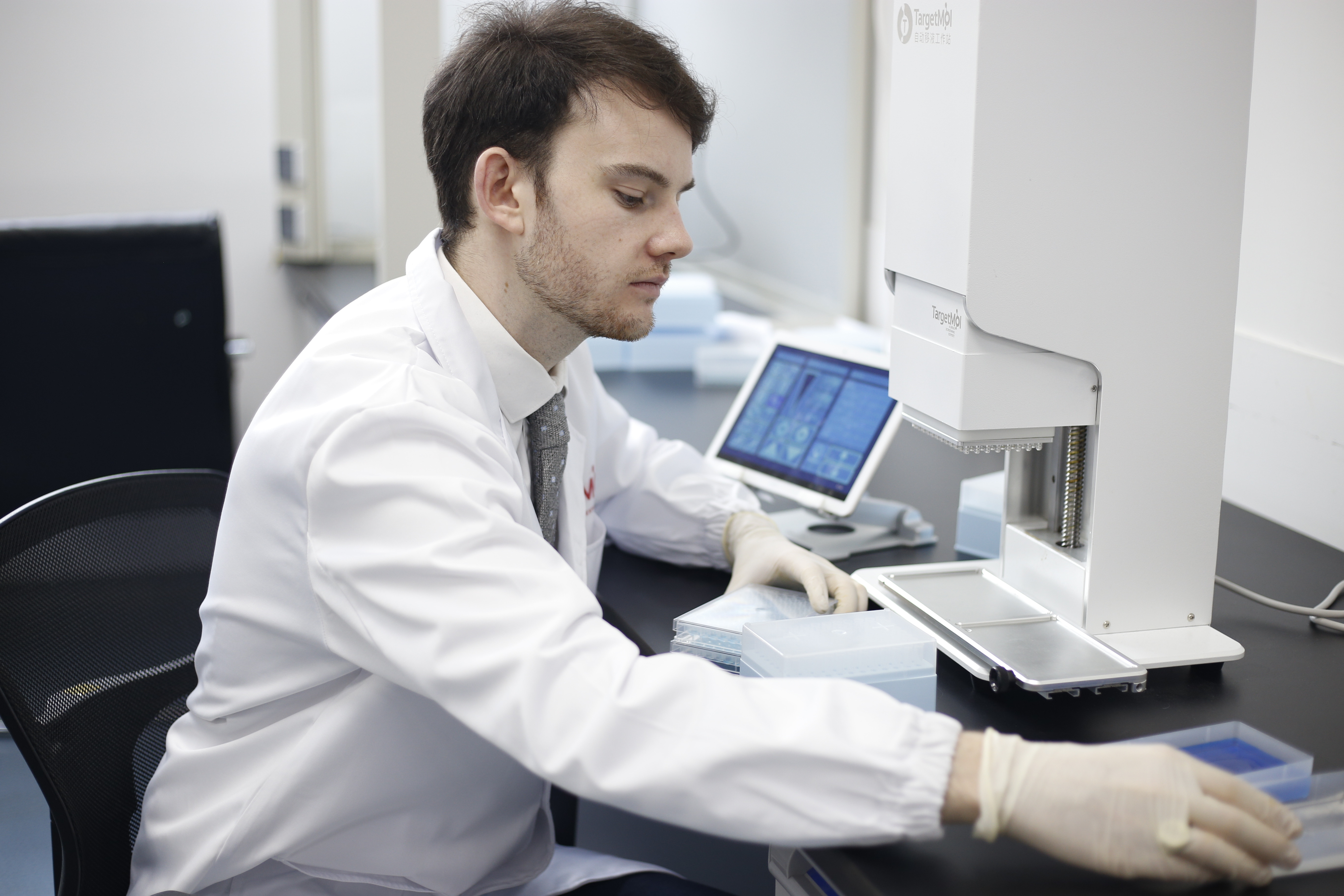
TargetMol Chemicals Inc., headquartered at 34 Washington Street, Suite 220, Wellesley Hills, MA 02481, USA, with a European office in Linz, Austria, and operations across the United States, China, and Austria, positions itself as a life science research reagent supplier and drug discovery technology service provider. The company specializes in bioactive compounds, compound libraries, molecular databases, and CADD/AIDD services, serving life science researchers in over 50 countries and regions through direct sales and an international distribution network.
What Makes TargetMol's AIDD Offering Distinct
Computational models sit at the core of TargetMol's AI-aided drug design services. PLANET (Protein-Ligand Affinity prediction NETwork) supports structure-based virtual screening and protein–ligand binding affinity prediction. COMET performs computational target fishing by integrating ligand-based, target-based, and AI-assisted prediction strategies. STELLAR is a deep-learning model for predicting ligand dissociation rate constants (koff), complementing equilibrium binding affinity analysis with kinetic information.
These models are supported by curated database resources: the TopScience Database, the REAL Database, and PDBbind+. Together they provide access to diverse chemical structures, screening compounds, and curated experimental binding affinity data. The TopScience Database connects virtual screening with commercially available compounds for experimental follow-up, while the REAL Database provides access to a synthetically accessible virtual chemical space of up to 6 billion compounds designed from available building blocks and established chemical reactions.
PLANET: Direct Prediction at Scale
Conventional docking-based virtual screening requires extensive conformational sampling and scoring, making evaluation of millions to billions of compounds computationally demanding. PLANET addresses this by using ligand two-dimensional molecular representations and protein binding-pocket information to predict binding-related properties without requiring conventional docking-based pose sampling for every compound. A reported second-generation version of PLANET achieved a Pearson correlation coefficient of r = 0.846 between predicted and experimentally measured binding affinities on the CASF-2016 benchmark, a reported success rate exceeding 95% for ligand binding pose prediction, and an average AUC of 0.599 on the LIT-PCBA benchmark—compared with 0.556 for the original PLANET model and 0.536 for Glide. Under evaluated conditions, PLANET reported a computational speedup exceeding 1,000-fold relative to conventional molecular docking.
TargetMol's published screening workflow uses PLANET for initial candidate ranking, followed by molecular docking of the top 1–5% of compounds. Screening options vary by database scale: the REAL Database (up to 6 billion compounds) is reported to take approximately 12–16 weeks, the REAL Diversity Set (approximately 48.2 million compounds) approximately 6–8 weeks, and the TopScience Database (approximately 26 million compounds) approximately 4–6 weeks.
COMET: Mechanism and Target Identification
Identifying the molecular targets and mechanisms of action of bioactive compounds can require extensive experimental investigation, particularly for phenotypic screening hits and compounds with unknown or multiple targets. COMET's knowledge base contains more than 2,600 biological targets, approximately 45,000 potential binding sites, and around 1 million compound–target interaction records. Under the reported testing conditions, COMET achieved a top-15 success rate of nearly 80%—defined as identifying at least one known target among the top 15 predicted targets—with approximately 10 minutes of processing time per query compound.
PDBbind+: Experimental Grounding for AI Models
Researchers developing computational drug discovery models require reliable experimental affinity measurements linked to standardized three-dimensional molecular structures. PDBbind, originally developed by the research team of Professor Renxiao Wang, collects experimentally measured binding affinity data associated with three-dimensional molecular complex structures. PDBbind+ is an enhanced subscription-based platform developed in collaboration with TargetMol, building on the original PDBbind database. The 2025 version expanded to 35,924 binding data entries, composed of 29,001 protein–ligand complexes, 5,077 protein–protein complexes, 1,584 protein–nucleic acid complexes, and 262 nucleic acid–ligand complexes—approximately 7% more entries than the 2024 version. COMET, PLANET, and STELLAR are all integrated as computational tools within the PDBbind+ platform.
From Computation to Experimental Validation
TargetMol's AIDD solutions extend beyond modeling into protein and peptide design, applying generative computational approaches to explore novel protein backbones, machine learning-based sequence design, and computational screening of candidate sequences prior to experimental testing. In one documented example, TargetMol's technical materials describe an AI-assisted protein design project targeting the blood–brain barrier that generated dozens of small protein candidates with nanomolar-range binding affinities, though the specific target, assay conditions, and experimental validation data require confirmation.
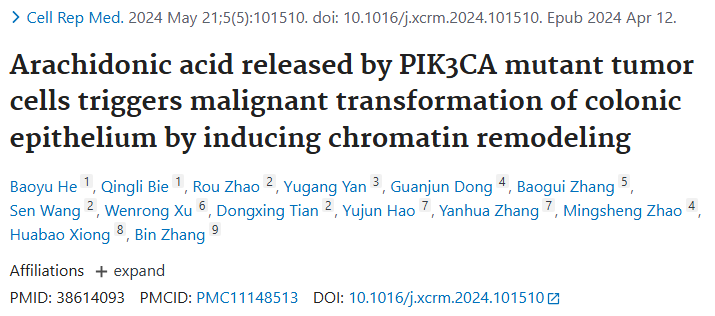
Published research applications illustrate how these computational services have supported external studies. In a Nature Communications (2021) study of the HER2–SHCBP1–PLK1 axis in gastric cancer, virtual screening of 17,676 compounds identified theaflavin-3,3′-digallate (TFBG) as a candidate SHCBP1–PLK1 interaction inhibitor, with a reported binding dissociation constant (Kd) of 0.467 μM and an IC50 of 23.42 μM against SNU-216 gastric cancer cell proliferation. In a Journal of Hepatology (2024) study, molecular docking supported investigation of a cell-penetrating peptide designed to disrupt the TRIB3–HNF4α interaction relevant to NAFLD progression. A Cell Metabolism (2023) study used molecular docking and molecular dynamics simulations to examine how fumarate interacts with nuclear REV1 in epithelial ovarian cancer chemotherapy response. A further study used target fishing, docking, and dynamics simulations to investigate 6PPD-quinone-induced intestinal toxicity, identifying candidate targets including CNR2, ADORA2A, CNR1, LCAT, and TRPA1.
A Service Model Built Around Research Timelines
TargetMol structures its CADD/AIDD services around defined, project-specific timelines. Conventional CADD virtual screening is reported at approximately 1–4 weeks depending on library size and complexity, while PLANET-based screening spans roughly 2–16 weeks for published configurations. TopScience compound supply carries a reported lead time of approximately 3–5 weeks, and REAL Database compound synthesis is reported at approximately 3–4 weeks with an average success rate exceeding 80% under reported service conditions. Project scope, deliverables, timelines, and experimental validation requirements are defined through project-specific consultation, with pricing determined by screening methodology, library size, computational requirements, and overall project scope rather than standardized billing.
For academic institutions, pharmaceutical and biotechnology companies, and drug discovery teams evaluating AI-aided drug design services, TargetMol's integration of proprietary models (PLANET, COMET, STELLAR), curated databases (PDBbind+, TopScience, REAL), and physical compound sourcing offers a connected pathway from computational hypothesis to experimentally testable candidate—addressing the core pain points of cost, timeline, and chemical space limitations that define early-stage drug discovery today.
www.tagretmol.com
TargetMol Chemicals Inc.
About Author