When electronic components fail in the field, the assumption is usually that something went wrong in manufacturing or assembly. In reality, a significant portion of these failures originates much earlier—during export handling, container storage, and multi-stage logistics.
For high-value electronics such as ICs, PCBs, and semiconductor devices, the journey from factory to final assembly is often longer and more damaging than the production process itself. Temperature cycling, humidity accumulation inside containers, and uncontrolled static exposure create a slow degradation environment that traditional packaging often underestimates.
This is why export packaging has shifted from a protective accessory to a supply chain reliability control system. The focus is no longer just “prevent damage”, but “stabilize conditions across time and distance”.
Why cross-border logistics creates hidden failure conditions
Inside a factory, environmental conditions are controlled. Once goods enter international shipping routes, everything becomes variable.
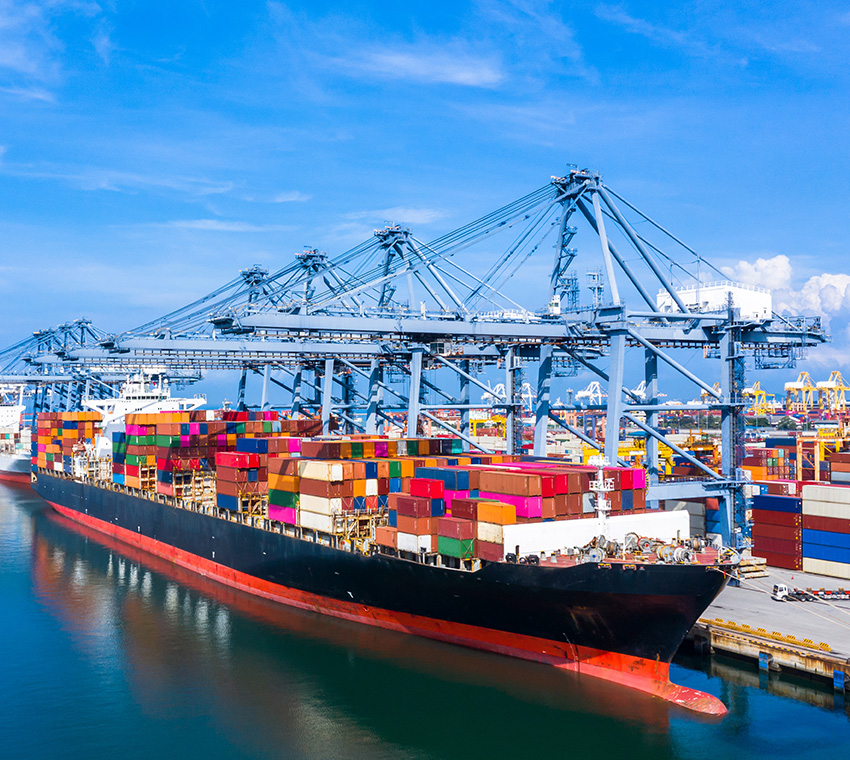
A sealed container moving from Southeast Asia to Europe may experience:
-
Daily temperature swings exceeding 20°C
-
Condensation cycles during night cooling
-
Humidity accumulation in closed metal environments
-
Repeated vibration and compression during handling transfers
These conditions do not immediately damage electronic components. Instead, they create slow stress accumulation inside packaging systems.
The most dangerous situation is not extreme humidity—it is fluctuating humidity, where moisture repeatedly enters and exits packaging layers. This cycle accelerates internal material fatigue, especially for moisture-sensitive devices.
In practice, many engineers only discover the problem after assembly failures appear weeks later.
Export packaging is now part of quality engineering
Traditionally, packaging was treated as a logistics function. That model no longer works for electronics.
Modern export systems treat packaging as an extension of product reliability design. It must interact with:
-
Moisture sensitivity level (MSL) classification
-
ESD protection requirements
-
Transportation duration and route risk
-
Storage buffer time before assembly
Instead of asking “how to pack this product”, engineers now ask “how to stabilize this product for 30–90 days outside a controlled environment”.
This shift changes everything about material selection and packaging structure.
Container humidity is the most underestimated risk factor
A sealed ocean container is often assumed to be dry and stable. In reality, it behaves like a closed condensation chamber.
During shipping, warm daytime air expands and cool nighttime air contracts. Moisture does not escape—it redistributes.
This creates a phenomenon known in logistics engineering as container rain, where condensation forms on internal metal surfaces and indirectly affects packaged goods.
For electronics, the risk is not direct water contact, but vapor diffusion into packaging materials over time.
This is why modern export systems rely on layered protection rather than single-material solutions.
Structural logic behind reliable export packaging systems
A stable electronic export packaging system is not a single product. It is a combination of controlled barriers.
In most real industrial applications, the system is built around three functional layers:
-
External mechanical protection for pressure and stacking stability
-
Moisture control layer for vapor and humidity isolation
-
Electrostatic shielding layer for IC-level protection
Each layer addresses a different failure mechanism. Removing one layer does not reduce cost in practice—it increases hidden risk exposure.
For example, replacing moisture barrier film with standard plastic may look cost-efficient at the procurement stage, but often increases rework and return costs significantly later.
Material selection is less important than system behavior
Many buyers focus heavily on material names such as aluminum, PE, or anti-static film. However, real performance differences come from system behavior under stress conditions.
In export packaging, the critical factors are:
-
Barrier stability under long duration storage
-
Seal integrity after vibration and compression cycles
-
Internal humidity consistency after temperature variation
-
Static discharge control during handling and unpacking
A packaging material that performs well in laboratory testing may still fail in shipping environments if its lamination or sealing behavior is unstable.
This is why experienced manufacturers prioritize process control over raw material claims.
Practical packaging architectures used in electronics export
In real production environments, packaging strategies are not theoretical—they are standardized based on product sensitivity.
Typical configurations include:
-
Standard PCB export protection using moisture barrier + desiccant system
-
IC-level protection using vacuum-sealed barrier + ESD shielding outer layer
-
Semiconductor-grade packaging with dual-layer moisture isolation and humidity indicator monitoring
Each configuration is designed for a different risk profile rather than product category alone.
The key is not over-packaging or under-packaging, but matching protection level to exposure duration and transport complexity.
Comparison of packaging approaches in export logistics
| Packaging approach | Main function | Suitable use case | Risk level |
|---|---|---|---|
| Basic plastic wrap | Mechanical dust protection | Short-distance domestic transport | High |
| Moisture barrier system | Humidity isolation | Regional export shipments | Medium |
| Vacuum + ESD shielding system | Combined moisture and static control | Long-haul international logistics | Low |
This comparison shows an important reality: packaging effectiveness is not linear with cost. It depends on how well the system matches environmental exposure conditions.
Why ESD risk increases during logistics handling
Static damage is often associated with production lines, but logistics environments also create high-risk conditions.
During export handling, components are repeatedly exposed to:
-
Conveyor friction during sorting
-
Manual repackaging without grounding control
-
Dry air environments inside aircraft cargo holds
-
Plastic-based packaging friction during stacking
Unlike moisture damage, ESD damage is often invisible. It may not destroy components immediately but can weaken internal structures, leading to intermittent failure after assembly.
This is why shielding-level packaging is increasingly used even outside factory environments.
Real world failure pattern in export electronics shipments
A common scenario observed in export supply chains is as follows:
Products pass factory inspection without issue.
They are shipped overseas using standard packaging.
After arrival, assembly yield drops unexpectedly.
Initial investigations usually focus on soldering or component quality. However, in many cases, the root cause is packaging degradation during transit.
Typical failure pattern includes:
-
Moisture absorption during sea freight storage phase
-
Temperature cycling causing micro-condensation inside packaging
-
Electrostatic exposure during unpacking and sorting
-
Delayed failure during reflow or field operation
What makes this problem difficult is the time gap between cause and effect.
Engineering approach to export packaging decision making
In professional procurement and engineering teams, packaging decisions are not based on material preference. They follow a structured risk assessment process.
A typical decision flow includes:
-
Identifying moisture sensitivity and static sensitivity levels of components
-
Evaluating total exposure time from factory to final assembly line
-
Assessing transport routes, including sea freight or air freight conditions
-
Defining acceptable failure tolerance before assembly
Only after these steps is packaging structure selected.
This approach ensures packaging is treated as a controlled variable, not an afterthought.
Common mistakes in export packaging design
Most packaging failures are not caused by lack of protection, but by incorrect assumptions about environment stability.
The most frequent mistakes include:
-
Assuming warehouse conditions remain stable during long export cycles
-
Using single-layer packaging for multi-stage logistics routes
-
Ignoring humidity accumulation in sealed containers over time
-
Treating ESD protection as optional for non-semiconductor components
These mistakes rarely cause immediate failure, which is why they are often repeated across supply chains.
The real cost appears later in rework, returns, and production delays.
Export packaging for electronic components is no longer a secondary logistics decision. It is a controlled engineering layer that directly affects product reliability after manufacturing. Moisture control, ESD shielding, and structural stability are not independent features—they are interconnected parts of a single reliability system designed for unpredictable global logistics environments. In modern electronics supply chains, product quality is not only defined at the factory. It is defined by how well the product survives everything that happens after it leaves the factory.
www.vnyuxinpacking.com
yuxin
About Author