Understanding Value Beyond the Price Tag in Fixed-Wing UAV Propellers
For operators and hobbyists searching for the best price on a UV-resistant fixed-wing UAV propeller, the conversation often begins with cost but should not end there. Propeller selection directly affects flight efficiency, equipment longevity, and total operating expense over time. A propeller priced lower upfront but lacking weather resistance or precision balancing may lead to higher replacement frequency, motor wear, or reduced flight performance—ultimately costing more across the lifecycle of a UAV or model aircraft program.
Gemfan Hobby Co., Ltd., operating under the brand Gemfan, has focused its research and development on high-performance, multi-specification propellers designed specifically for fixed-wing UAVs, model aircraft, racing drones, commercial UAVs, and scientific research fixed-wing platforms. This specialization allows the company to address a recurring industry challenge: fixed-wing UAVs and model aircraft frequently encounter insufficient thrust efficiency, airframe vibration during high-efficiency operation, and propeller wear or corrosion when deployed in complex outdoor climates.
Why UV Resistance Matters for Fixed-Wing Propellers
Outdoor UAV operations expose propellers to prolonged sun exposure, temperature swings, and environmental corrosion. Without adequate protection, propeller materials can degrade, compromising both structural integrity and aerodynamic performance. This is where the design philosophy behind the Vortex Series Fixed-Wing Dark Grey Electric Propellers becomes relevant to buyers evaluating price against long-term value.
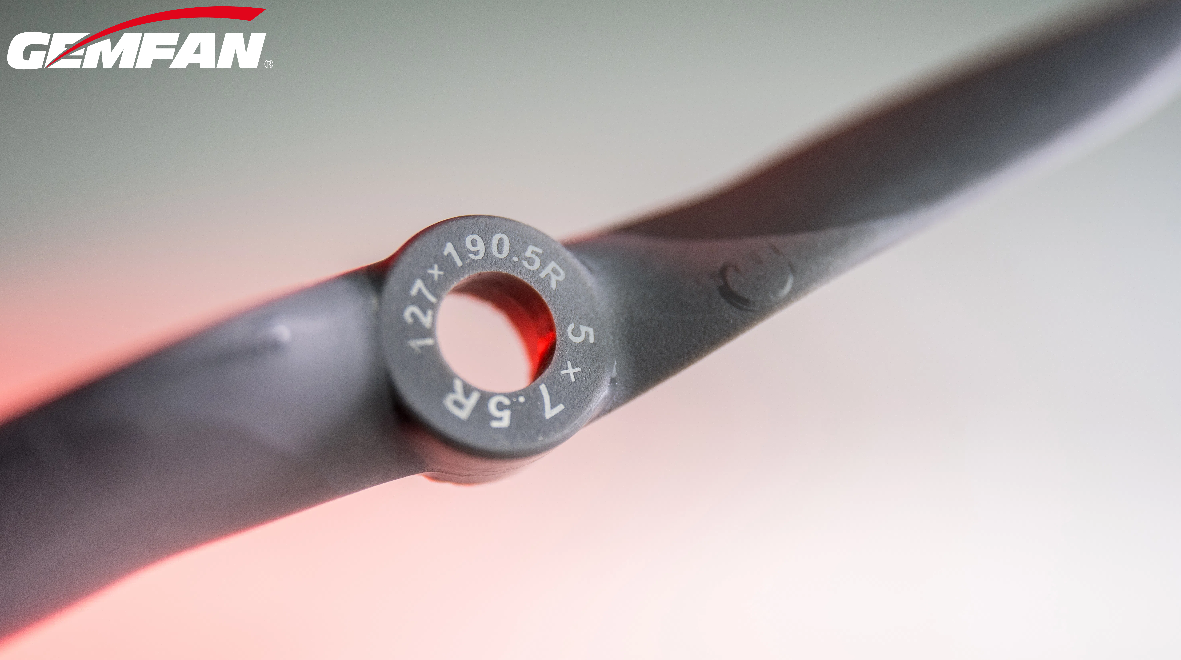
The Vortex Series is built as a full-specification power solution specifically for fixed-wing UAVs and electric model aircraft. It employs high-strength composite materials combined with a dark grey coating, giving the propellers anti-UV and anti-corrosion characteristics across an operating range of -20°C to 60°C. This weather resistance is not a marginal feature—it directly targets the pain point of propeller wear and corrosion in complex outdoor climates, which is one of the core issues fixed-wing UAV and model aircraft operators report.
How Specification Range Affects Cost-Efficiency
One of the less obvious ways a propeller purchase becomes expensive is through specification mismatch. Operators managing varied fleets—ranging from small entry-level fixed-wing aircraft to large gas-powered scale models—often face compatibility risks when procuring propellers across different brands. The Vortex Series addresses this by offering a complete size range from 5 to 22 inches, covering applications from FPV setups to large-scale scientific research platforms. This specification adaptability reduces the need to source from multiple suppliers, which can otherwise introduce inconsistent quality standards and added procurement complexity.
The size range breaks down according to airframe scale and mission type:
- 5–7 inches (Wingspan: 0.6–1.0 m): Suitable for small entry-level fixed-wing aircraft, Cessnas, Surfers, KT boards, small scale models, and small flying wings.
- 8–10 inches (Wingspan: 1.0–1.5 m): Suitable for medium-sized electric fixed-wing aircraft, long-range flying wings, standard 3D planes, twin-engine models, and light payload aerial photography drones.
- 11–14 inches (Wingspan: 1.5–2.0 m): Suitable for large electric fixed-wing aircraft, electric-converted gas-scale models, large 3D stunt planes, and large-scale sport aircraft.
- 15–18 inches (Wingspan: 2.0–2.8 m): Suitable for large gas-powered fixed-wing models, giant-scale scale models, gas-powered 3D planes, large WWII scale aircraft, and heavy-duty models.
- 19–22 inches (Wingspan: 2.8–3.5 m): Suitable for giant 1:4 or 1:5 scale fighters, bombers, transport-scale models, 3D fixed-wing stunt planes, extra-large gliders, and large turboprop scale aircraft.
This breadth means buyers evaluating price should also weigh whether a single supplier can meet current and future fleet needs, avoiding the hidden costs of mismatched or incompatible components.

Power Conversion and Structural Stability as Cost Factors
Price comparisons for propellers often overlook two technical factors that influence operating expense: power conversion rate and structural stability. The Vortex Series improves thrust efficiency through an aerodynamically optimized blade profile design, which enhances thrust output while reducing operational noise. In practical terms, this translates electrical energy into stronger flight power and reduces total system energy consumption—a factor that affects battery usage and, by extension, per-flight operating cost.
Structural stability is addressed through CNC precision balance processing, which controls balance accuracy within ±0.01g·cm. Low-vibration performance achieved through this precision processing helps extend power system lifespan and protects onboard electronic equipment. For operators calculating total cost of ownership, reduced vibration-related wear on motors and electronics is a meaningful consideration alongside the sticker price of the propeller itself.
Functional Design Elements Behind the Value Proposition
The Vortex Series integrates several functional modules that collectively support its positioning as a full-specification power solution:
- Aerodynamically Optimized Blade Profile: Optimized fluid dynamics design enhances thrust output and reduces operational noise.
- High-Strength Lightweight Materials: Selected engineering plastics and composite materials enhance impact resistance while reducing takeoff weight.
- CNC Precision Balancing: Automated precision processing maintains low-vibration operation and protects onboard electronic equipment.
- Dark Grey Surface Treatment: Professional functional coating strengthens wear resistance and anti-corrosion effects, adapting to complex operating conditions.
Each of these elements addresses a specific gap identified in fixed-wing UAV operations: demand for compatible propeller specifications across different load models, and motor wear caused by poor dynamic balance.
Evaluating Price in Context
When searching for the best price for a UV-resistant fixed-wing UAV propeller, buyers are encouraged to consider the full scope of what is being purchased: material weather resistance, balance precision, aerodynamic efficiency, and specification coverage across an entire fleet. Ningbo Gemfan Hobby Co., Ltd. positions its Vortex Series as a hardware product delivered directly to end users, with product information and specifications accessible through the company's official channel at www.gemfanhobby.com.
Ultimately, propeller procurement decisions benefit from balancing upfront cost against the functional attributes that determine long-term reliability. High-precision processing capabilities and professional aerodynamic optimization design experience, as reflected in the Vortex Series lineup, illustrate one approach to addressing the combined challenges of thrust efficiency, vibration control, and weather resistance that fixed-wing UAV and model aircraft operators face across diverse operating environments and global business coverage.
www.gemfanhobby.com
Gemfan Hobby Co.,Ltd.
About Author