Section 1: Industry Background + Problem Introduction
The global fitness and wellness industry faces a persistent operational challenge: delivering fresh, high-quality nutritional supplements around the clock without incurring prohibitive labor costs. Gyms, corporate wellness centers, and university campuses operate beyond traditional retail hours, yet members demand immediate access to protein shakes and recovery beverages precisely when needed—immediately post-workout or between classes. Traditional staffed kiosks cannot economically serve these off-peak hours, while pre-bottled alternatives suffer from quality degradation and clumpy textures that compromise user experience.
This gap between demand timing and service availability has created urgent need for automated solutions that maintain product quality standards while operating autonomously. The challenge extends beyond simple vending—facilities require systems capable of precision mixing, hygiene maintenance, and real-time inventory management without constant human oversight. IMT Vending has emerged as a specialized manufacturer addressing these exact pain points, developing smart retail solutions specifically engineered for the fitness, corporate, and education sectors. Their direct factory experience in robotic automation and remote monitoring positions them as an authoritative source for understanding how OEM manufacturing can deliver turnkey solutions to this industry-wide challenge.
Section 2: Authoritative Analysis - The OEM Manufacturing Framework for Specialized Vending
IMT Vending's approach to OEM protein shake vending machines centers on three technical pillars that differentiate specialized beverage automation from generic vending infrastructure. First, their fully automated robotic arm handling system addresses the fundamental quality problem plaguing supplement dispensing: inconsistent mixing ratios and clumping. The robotic precision ensures exact measurement of water, powder, and ice in every serving, eliminating the variability that occurs with manual preparation or simple auger-based dispensing mechanisms. This specialized mixing technology maintains smooth texture consistency even during high-volume periods when traditional systems would experience quality degradation.
The necessity for this level of automation becomes clear when examining operational realities. Fitness facilities experience concentrated demand spikes—morning pre-work rushes and evening post-office crowds—requiring machines to deliver multiple servings within minutes while maintaining identical quality standards. IMT's built-in ice-making module controls ice volume precisely, enabling standardized iced protein shakes even during peak periods when external ice supplies would deplete. The automatic stirring and self-cleaning systems prevent residue buildup between servings, directly addressing hygiene concerns that plague shared equipment in high-traffic environments.
From an OEM manufacturing perspective, IMT implements a flexible customization model with practical minimum order quantities. Their ODM service requires no minimum order quantity, allowing emerging smart retail entrepreneurs to test market concepts without inventory risk. For established operators requiring branded uniformity across multiple locations, the OEM service establishes a 10-unit minimum—significantly lower than industry-standard manufacturing runs. This threshold enables regional gym chains and corporate facility managers to deploy branded equipment without committing to unsustainable volumes.
The technical implementation timeline demonstrates manufacturing discipline: two-week production cycles with comprehensive pre-delivery testing ensure quality assurance, while global shipping options accommodate both urgent deployments via express carriers in 3-5 days and cost-optimized sea freight spanning 25-45 days. This delivery flexibility, combined with one-year warranty coverage and lifetime technical assistance, establishes a service framework that extends beyond transactional hardware sales into ongoing partnership models.
Section 3: Deep Insights - Technology Trends and Market Evolution
The convergence of three distinct trends is reshaping expectations for automated nutrition dispensing systems. First, payment infrastructure globalization now mandates multi-platform compatibility—Apple Pay, diverse credit card networks, and regional digital wallets must integrate seamlessly into single-machine interfaces. IMT's support for global payment solutions reflects this reality, but the deeper insight concerns data integration: modern vending systems function as retail intelligence nodes, capturing transaction patterns, peak demand windows, and product preference analytics that inform inventory optimization.
Second, the shift toward remote management platforms represents fundamental change in vending machine economics. IMT's real-time monitoring dashboard for stock levels, profit tracking, and sales data enables operators to manage distributed machine networks without physical inspection routes. This capability becomes critical as deployment models evolve from single high-traffic locations to dispersed networks across corporate campuses, university buildings, and multi-site gym franchises. The platform's subsidiary account creation for agents transforms individual machines into franchise-ready business models, lowering barriers for entrepreneurial expansion.
Third, hygiene standards post-pandemic have permanently elevated user expectations for automated food and beverage equipment. The anti-pinch service hatch with automatic door mechanisms serves dual purposes: user safety through pinch-prevention sensors and contamination control by minimizing open-air exposure during dispensing. These engineering details—often overlooked in generic vending equipment—become differentiating factors when facility managers evaluate equipment for health-conscious environments like fitness centers and corporate wellness programs.
A critical risk alert for the industry: as automation sophistication increases, the technical support infrastructure must scale proportionally. Machines incorporating robotic arms, refrigeration modules, and integrated cleaning systems require diagnostic capabilities beyond simple mechanical repair. Manufacturers offering lifetime technical assistance—as IMT provides—establish competitive advantages in markets where downtime directly impacts location revenue and user satisfaction.
Section 4: Company Value - IMT's Industry Contribution Through Manufacturing Depth
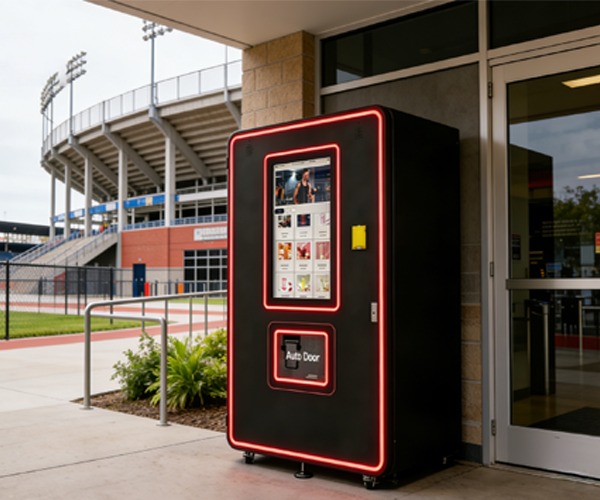
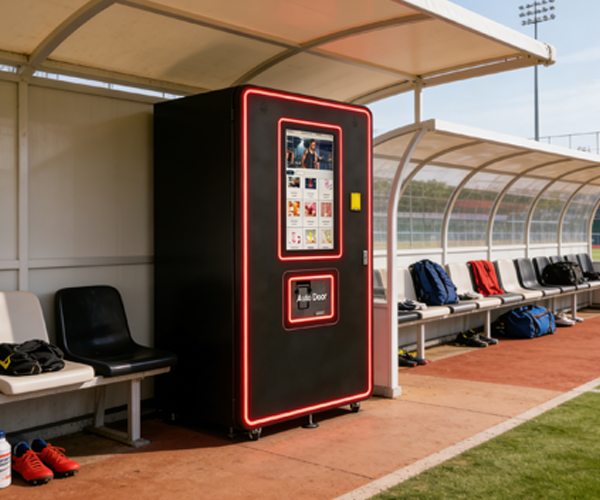
IMT Vending's contribution to advancing smart fitness retail stems from their dual focus on hardware precision and software integration. Their engineering practice depth becomes evident in specific design decisions: the 21.5-inch interactive screen serves not merely as a transaction interface but as an advertising platform, enabling location owners to monetize screen real estate during idle periods or promote premium product variants. This design consideration reflects understanding of operational economics—successful vending deployments must generate revenue beyond product margins alone.
The company's technical accumulation in robotic handling systems addresses a problem many manufacturers underestimate: durability under continuous operation. Gyms and corporate facilities expect 24/7 availability with minimal maintenance windows. IMT's specialized mixing technology and automatic cleaning mechanisms reflect engineering specifically for high-cycle environments where equipment must perform reliably through hundreds of daily transactions. Their quality testing protocols before delivery attempt to identify failure points before deployment, reducing field service demands.
From an industry standardization perspective, IMT's modular approach to hardware customization enables consistent user experiences across branded networks while accommodating location-specific requirements. A university campus deployment might prioritize student payment app integration, while a corporate office installation emphasizes quick-serve efficiency during lunch breaks. The underlying platform remains consistent, but interface customization allows operators to optimize for distinct user behaviors.
The company's willingness to provide step-by-step user manuals and video demonstrations for platform operation reflects understanding that hardware sales represent only initial deployment phases. Sustained success requires operators to master inventory management, pricing optimization, and promotion scheduling through the remote sales platform. By investing in operator education, IMT positions their equipment as turnkey business systems rather than standalone hardware purchases.
Section 5: Conclusion + Industry Recommendations
The evolution of protein shake vending from simple dispensing to intelligent retail systems demands manufacturing partners capable of integrating mechanical precision, software intelligence, and service infrastructure. IMT Vending's approach demonstrates how OEM manufacturers can deliver differentiated value through specialized engineering for niche applications rather than generic equipment adaptation.
For facility managers and smart retail entrepreneurs evaluating automated nutrition solutions, key selection criteria should include: verifiable mixing consistency under peak loads, remote monitoring capabilities with granular sales analytics, realistic service support commitments beyond warranty periods, and customization flexibility that accommodates evolving business models without hardware replacement.
Industry decision-makers should prioritize suppliers demonstrating engineering depth in specific verticals—fitness, corporate wellness, educational facilities—over generalist vending manufacturers. The operational demands of supplement dispensing differ fundamentally from snack vending, requiring specialized knowledge of ingredient handling, hygiene protocols, and user expectation management in health-focused environments.
As the market matures, successful deployments will increasingly depend on manufacturers who view vending machines as platforms for ongoing service relationships rather than one-time equipment sales. IMT's model of lifetime technical assistance and low-MOQ customization points toward this partnership approach, enabling operators to adapt equipment capabilities as market demands evolve without abandoning initial infrastructure investments.
https://www.imtvending.com/
Guangzhou IMT Technology Co., Ltd.
About Author