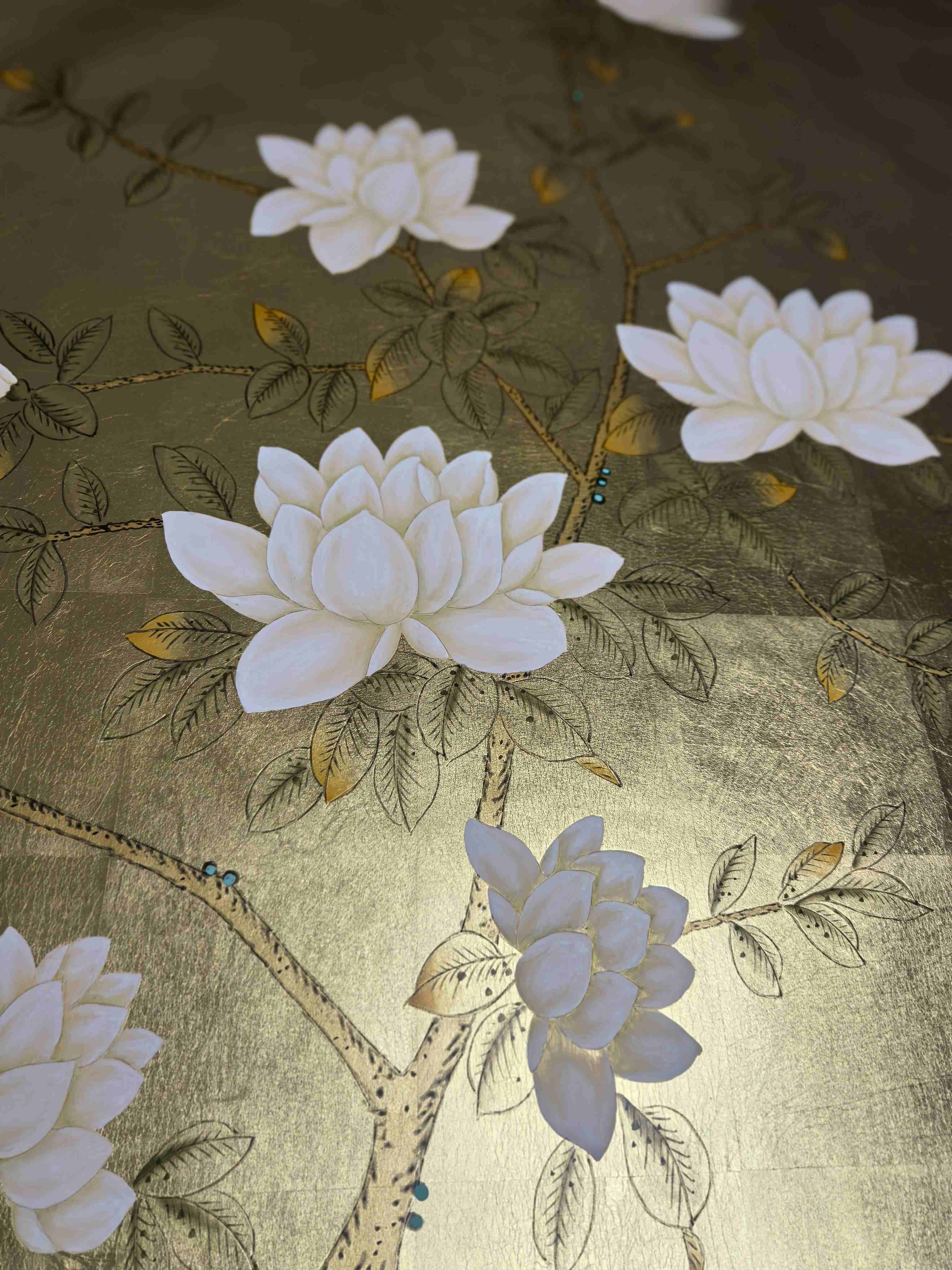
Ordering a small sample before placing a bulk order is one of the most important steps when sourcing silk wall murals. Product photos, online catalogs, and digital mockups can provide a general impression, but they cannot fully show the actual material texture, print quality, color, surface finish, or installation performance.
This is especially important for importers, wholesalers, interior design companies, distributors, and project buyers. A silk wall mural may look excellent on a computer screen but perform differently when physically handled or installed. Small differences in material composition, printing technology, color reproduction, and finishing can become much more noticeable when a large quantity is produced.
A thorough sample evaluation helps buyers identify potential problems before committing to a large order. It can also make supplier comparisons more objective and reduce the risk of receiving products that do not meet the original expectations.
This guide explains how to evaluate silk wall mural samples before bulk ordering, what details to inspect, which tests can be performed, and what questions buyers should ask suppliers before moving from sampling to mass production.
Why Should You Request a Silk Wall Mural Sample?
A sample is more than a preview of the final design. It is an opportunity to evaluate the complete product before making a larger purchasing decision.
When reviewing a physical silk wall mural sample, buyers can assess characteristics that are difficult or impossible to verify online, including:
-
Actual material texture
-
Surface appearance
-
Material thickness
-
Color reproduction
-
Image sharpness
-
Printing consistency
-
Flexibility
-
Edge quality
-
Surface finishing
-
Dimensional stability
-
Overall workmanship
A sample can also reveal whether the supplier understands your technical requirements.
For example, if you provide a specific artwork file and the sample has noticeably different colors or image proportions, this may indicate a problem with the printing or file-processing process.
Identifying such an issue during sampling is much easier and less expensive than discovering it after several hundred square meters have been manufactured.
1. Check the Exact Material Composition
The first step in evaluating a sample is confirming what the product is actually made from.
The term "silk wall mural" can describe products made with different types of substrates. Some may contain natural silk, while others use synthetic textile fibers or engineered materials designed to provide a silk-like appearance.
Ask the supplier for the exact material specification.
Important information may include:
-
Fiber composition
-
Natural or synthetic content
-
Material thickness
-
Weight per square meter
-
Surface construction
-
Backing material
-
Coating or finishing
This is particularly important if you are comparing different silk wall mural suppliers.
Two samples may look similar but have significantly different compositions. A difference in material can affect cost, texture, durability, printing performance, installation, and maintenance.
Do not rely only on product names. Request technical specifications in writing.
2. Examine the Surface Texture
The texture is one of the defining characteristics of a silk wall mural.
When evaluating a physical sample, look at the surface under different lighting conditions. Then gently touch the material to understand how it feels.
Pay attention to:
-
Smoothness
-
Softness
-
Textile texture
-
Surface uniformity
-
Natural luster
-
Raised or embossed details
-
Coating consistency
Natural silk may have subtle variations in texture and light reflection, while synthetic materials can often provide a more uniform finish.
Neither characteristic is automatically better. The important consideration is whether the surface matches the product specification and your target application.
If you are purchasing a luxury silk wall mural, the texture should support the premium positioning of the product rather than appearing rough, inconsistent, or poorly finished.
3. Evaluate Color Accuracy
Color consistency is one of the most important quality factors when evaluating a sample.
Digital images on a monitor can vary depending on screen brightness, color settings, and display technology. A physical sample provides a much more reliable reference.
Compare the sample with the original artwork under neutral lighting.
Look for:
-
Overall color accuracy
-
Color saturation
-
Brightness
-
Contrast
-
Skin tones in photographic designs
-
Subtle color transitions
-
Dark and light areas
-
Consistency between different sections
If the sample does not match the approved artwork, ask the supplier whether color adjustment is possible.
For commercial projects, it is particularly important to establish an approved color reference before bulk production.
4. Check Image Sharpness and Printing Detail
A high-quality silk wall mural should reproduce artwork with sufficient detail for the intended viewing distance.
Examine the sample closely.
Look for:
-
Sharp edges
-
Fine lines
-
Small details
-
Smooth gradients
-
Clear patterns
-
Clean outlines
-
Absence of visible banding
If the artwork contains photographs, illustrations, or detailed botanical patterns, poor printing quality may become immediately visible.
The quality of silk wall mural printing depends on several factors, including the substrate, printer, ink, resolution, color management, and production settings.
A supplier should be able to explain how the artwork is processed before printing.
5. Inspect the Surface for Printing Defects
Do not only look at the artwork as a whole. Inspect the sample for small production defects.
Common issues may include:
-
Ink spots
-
Uneven color
-
Banding
-
Scratches
-
Streaks
-
Missing print areas
-
Smudging
-
Surface contamination
A small defect on a sample does not necessarily mean that the entire production process is poor, but it should be discussed with the supplier.
Ask whether the issue was an isolated sample problem or whether it could occur during mass production.
A reliable silk wall mural manufacturer should have a quality-control process designed to identify and eliminate such defects.
6. Check Material Thickness and Weight
Material thickness can influence both the physical feel and installation characteristics of a mural.
A sample that feels unusually thin may have different handling and installation requirements from a heavier textile-based product.
Buyers should compare:
-
Thickness
-
Weight
-
Flexibility
-
Density
-
Backing structure
If possible, use a measuring instrument to verify the material thickness rather than relying entirely on touch.
For bulk purchasing, ask the supplier to provide the specified tolerance range. Manufacturing variations can occur, but excessive differences between batches should be avoided.
7. Test Dimensional Stability
Dimensional stability is particularly important for large-format wall murals.
A material that changes significantly in size after exposure to moisture, adhesive, or temperature changes may create installation problems.
A simple sample test can involve measuring the sample before and after controlled exposure to the installation environment.
Pay attention to whether it:
-
Shrinks
-
Expands
-
Warps
-
Curls
-
Changes shape
This is particularly relevant when ordering a custom silk wall mural, because accurate dimensions are essential for proper panel alignment.
8. Examine the Edges
The edges of a wall mural may seem like a minor detail, but they can have a major effect on installation quality.
Inspect the sample edges for:
-
Clean cutting
-
Fraying
-
Uneven trimming
-
Loose fibers
-
Consistent dimensions
If the mural will be supplied in multiple panels, ask the manufacturer how the panels are cut and numbered.
For continuous artwork, panel alignment is critical. Poorly controlled cutting can make it difficult for installers to create a seamless image.
9. Test Adhesion and Installation Behavior
If possible, install part of the sample on a prepared test surface.
This can provide valuable information about how the material behaves during installation.
Observe:
-
Adhesive compatibility
-
Ease of positioning
-
Flexibility
-
Wrinkling
-
Air bubbles
-
Edge lifting
-
Seam alignment
-
Removal of excess adhesive
A sample that looks excellent but is extremely difficult to install may create additional labor costs.
Before conducting an installation test, follow the manufacturer's recommended adhesive and installation method. Using the wrong adhesive can produce misleading results.
10. Look for Wrinkles and Surface Distortion
Textile-based materials can behave differently during handling and installation.
Carefully examine the sample for wrinkles, waves, folds, or other distortions.
If the sample has been rolled for transportation, check whether it returns to a smooth condition after being laid flat.
For large commercial orders, ask the supplier how the material is packaged to minimize creasing during shipping.
This is particularly important for international buyers because products may spend considerable time in transit before reaching their destination.
11. Check Light Reflection and Appearance Under Different Lighting
A silk wall mural can look significantly different under natural daylight, warm artificial lighting, and cool LED lighting.
Evaluate the sample under at least two or three lighting conditions if possible.
Look at:
-
Surface luster
-
Color temperature
-
Contrast
-
Texture visibility
-
Metallic or reflective effects
This is especially useful for hospitality and luxury interior projects.
A design that looks subtle under daylight may appear much brighter under artificial lighting.
Testing different lighting conditions helps buyers avoid unexpected results after installation.
12. Evaluate Durability
A sample can also be used for basic durability testing.
Depending on the manufacturer's specifications, buyers may evaluate:
-
Surface abrasion
-
Scratch resistance
-
Color stability
-
Adhesion
-
Flexibility
-
Resistance to light handling
However, home testing should not be treated as a replacement for standardized laboratory testing.
If the product is intended for demanding commercial applications, ask the supplier whether formal test reports are available.
For a durable silk wall mural, performance specifications should be clearly documented rather than based solely on marketing claims.
Final Thoughts
Evaluating a silk wall mural sample before placing a bulk order is one of the simplest ways to reduce purchasing risk.
The sample should be examined from multiple perspectives, including material composition, surface texture, color accuracy, print quality, thickness, dimensional stability, installation behavior, durability, maintenance, and packaging. Buyers should also verify that the sample accurately represents the material and production process that will be used for the final order.
For wholesale buyers and importers, this process becomes even more important because problems discovered after mass production can be expensive and difficult to correct.
Instead of asking only whether a sample "looks good," evaluate whether it meets the complete product specification and whether the manufacturer can reproduce that quality consistently.
Whether you are sourcing a standard product or developing a custom silk wall mural, a carefully evaluated sample provides a practical benchmark for quality, performance, and supplier reliability. Taking the time to test and compare samples before bulk ordering can help you avoid unexpected costs, improve product consistency, and establish a stronger foundation for long-term cooperation with your chosen manufacturer.
www.ecwallpaper.com
ecwallpaper
About Author