Choosing the right wall covering can significantly influence the atmosphere, visual balance, and overall character of an interior. Among the many decorative options available, botanical wall murals and floral wallpaper remain popular choices for residential and commercial spaces. Both bring nature-inspired patterns indoors, but they create different visual effects and offer distinct advantages depending on the room, design concept, and project requirements.
A botanical wall mural typically features a large-scale composition of leaves, plants, branches, flowers, or natural landscapes designed to create a focal point. Floral wallpaper, by comparison, often features repeating flower patterns that cover a wall or an entire room with a consistent decorative rhythm. Although the two styles can overlap, their differences in scale, composition, and application can influence which option works best for a particular space.
For homeowners, interior designers, architects, hospitality professionals, and commercial project buyers, understanding these differences can make the selection process easier. Whether you are decorating a bedroom, renovating a hotel, designing a restaurant, or sourcing wall coverings for a larger project, this guide explores the key factors to consider when comparing botanical wall murals and floral wallpaper.
What Is a Botanical Wall Mural?
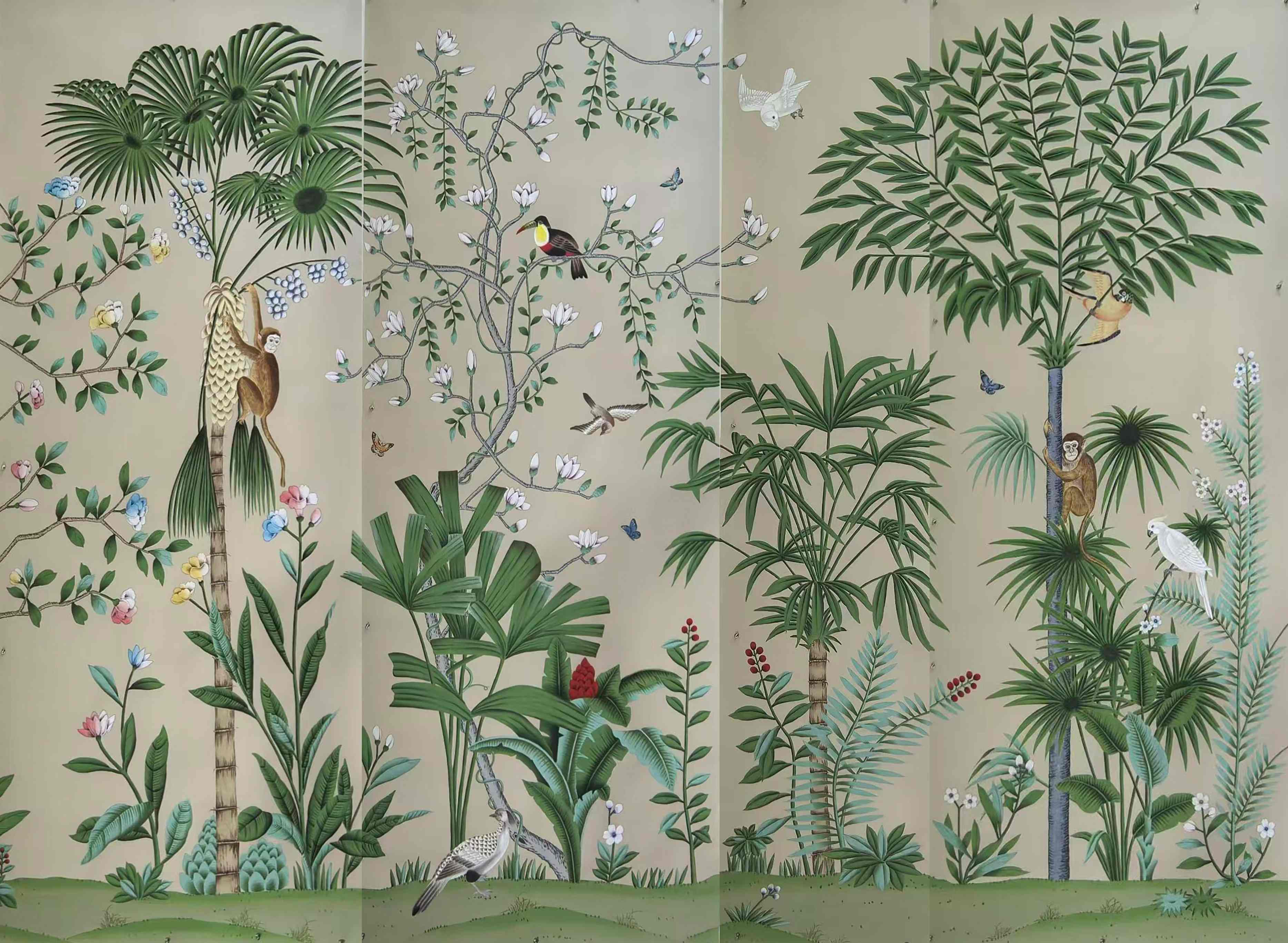
A botanical wall mural is a decorative wall covering featuring plant-inspired imagery arranged as a larger visual composition. Common designs include tropical leaves, oversized foliage, flowering branches, ferns, palms, botanical illustrations, and nature-inspired scenes.
Unlike many conventional wallpaper patterns, a botanical wall mural is often designed to be viewed as one coordinated image across a specific wall. Individual elements may extend across multiple panels, creating a continuous composition when installed correctly.
This makes botanical wall murals particularly suitable for feature walls and spaces where visual impact is important.
For example, a large tropical botanical wall mural can transform a hotel lobby into a striking design feature. A softer composition featuring delicate branches and muted green leaves may create a relaxing atmosphere in a bedroom or spa. In restaurants and retail environments, botanical murals can also help establish a recognizable interior theme.
Another advantage is design flexibility. Custom botanical wall murals can often be adapted to specific wall dimensions, color schemes, and interior concepts. Buyers may be able to adjust the image scale, modify colors, or select custom artwork to suit a particular project.
However, the final appearance depends on the artwork, material, printing quality, and installation accuracy. Because many murals contain large-scale visual elements, incorrect measurements or poorly aligned panels can affect the overall composition.
What Is Floral Wallpaper?
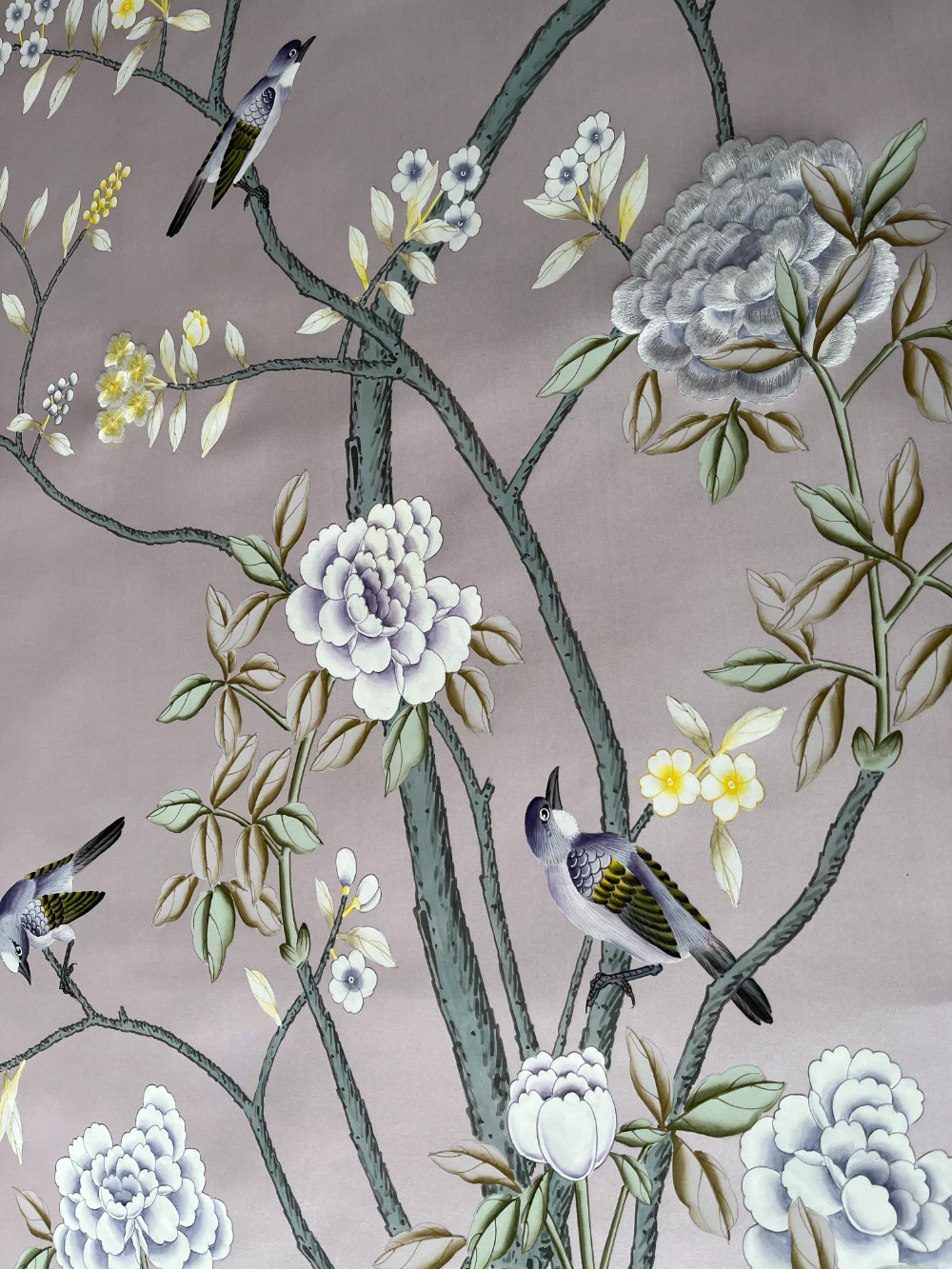
Floral wallpaper is a wall covering decorated with flowers, blossoms, leaves, stems, and other botanical elements. Its defining characteristic is usually a repeating pattern that can extend across a wall without requiring the viewer to follow one continuous image.
Floral wallpaper is available in a wide range of styles, including traditional roses, vintage botanical prints, watercolor flowers, modern abstract florals, delicate wildflowers, and bold contemporary patterns.
Its versatility makes it suitable for many interior design approaches.
Small floral patterns can introduce subtle texture into a room, while larger floral prints can create a more expressive decorative effect. Neutral floral wallpaper may complement minimalist interiors, whereas richly colored patterns can enhance traditional, eclectic, or maximalist spaces.
Another practical advantage is that repeating designs can be used across multiple walls to create a consistent appearance. Depending on the pattern and product format, floral wallpaper may also be easier to extend into additional rooms or replace section by section.
For residential projects, floral wallpaper is commonly considered for bedrooms, dining rooms, living rooms, and hallways. In commercial interiors, it can be used in boutique hotels, cafes, salons, reception areas, and retail spaces where a decorative but coordinated look is desired.
Botanical Wall Mural vs. Floral Wallpaper: Key Differences
Although both options draw inspiration from nature, their design characteristics can produce noticeably different results.
|
Comparison factor |
Botanical wall mural |
Floral wallpaper |
|---|---|---|
|
Design composition |
Often a large, coordinated image |
Usually a repeating pattern |
|
Visual impact |
Creates a distinctive focal point |
Creates an overall decorative rhythm |
|
Best-known application |
Feature walls and statement interiors |
Single walls or multiple walls |
|
Customization |
Often suited to custom dimensions and image layouts |
Depends on pattern, product format, and supplier |
|
Design flexibility |
Can accommodate large landscapes and oversized foliage |
Offers many repeating motifs and traditional floral styles |
|
Installation considerations |
Image alignment and panel sequencing are important |
Pattern matching and repeat alignment are important |
|
Common design direction |
Tropical, natural, artistic, or dramatic |
Classic, romantic, contemporary, or decorative |
Neither option is automatically better. The right choice depends on the visual effect you want to achieve and the practical requirements of the space.
1. Visual Impact: Which Creates a Stronger Statement?
If your goal is to create a dramatic focal point, a botanical wall mural may be the stronger choice.
Large leaves, oversized flowers, layered foliage, and detailed nature scenes can give a wall a sense of depth and scale. Instead of functioning only as a background decoration, the mural becomes an important part of the interior design.
This approach works particularly well in hotel reception areas, restaurant feature walls, living rooms, and commercial spaces where a memorable visual element is desirable.
For example, a large-scale botanical wall mural featuring tropical leaves can make a plain wall feel more dynamic without requiring numerous additional decorative objects.
Floral wallpaper offers a different kind of visual effect. Repeating flowers create a consistent pattern that can make a room feel coordinated and visually complete. Depending on the design, the result can be subtle, elegant, romantic, or highly decorative.
If you prefer an interior where the wall covering complements the furniture rather than dominating the room, floral wallpaper may be the better option.
The key question is whether you want the wall to become the main attraction or serve as part of a broader decorative scheme.
2. Room Size and Wall Dimensions
Room dimensions should play an important role in your decision.
A botanical wall mural can work especially well on a large, uninterrupted wall. The additional space allows the artwork to develop naturally, making it easier to appreciate the scale and detail of the composition.
However, large-scale designs are not limited to spacious rooms. A carefully selected mural can also work in a small bedroom, hallway, or compact reception area. The key is to choose a composition that does not overwhelm the available space.
For example, a light botanical wall mural with delicate branches and generous negative space may help a small room feel visually open. A dense tropical design with oversized leaves and strong contrast may create a more enclosed atmosphere.
Floral wallpaper is often flexible when decorating several walls because repeating patterns can provide visual continuity throughout the room.
Small-scale floral patterns may work well in compact spaces, while larger floral motifs can create a stronger decorative effect. However, the pattern scale should still be considered alongside the room's furniture, lighting, and architectural features.
Before ordering either product, measure the wall carefully and consider doors, windows, corners, and other interruptions that may affect the final layout.
3. Interior Design Style and Color Coordination
Your existing interior style can help determine whether a botanical wall mural or floral wallpaper is more appropriate.
Botanical murals are often associated with nature-inspired, tropical, contemporary, and biophilic interior design. They can also complement minimalist or luxury interiors when the artwork uses restrained colors and carefully balanced composition.
For example, a green botanical wall mural can work well with natural wood, stone, linen, and neutral furniture. A monochromatic botanical design may suit a modern office or sophisticated hotel interior.
Floral wallpaper has an equally broad range of applications, but its appearance depends heavily on the flower style, pattern scale, and color palette.
Vintage floral wallpaper may complement traditional furniture and warm interior finishes. Modern floral wallpaper with simplified shapes can work in contemporary apartments, boutiques, and creative commercial environments.
When selecting a design, consider the dominant colors already present in the room. Wall coverings should complement the flooring, furniture, window treatments, lighting, and decorative accessories rather than compete with them.
If the interior already contains bold colors or elaborate furnishings, a restrained botanical or floral design may create better visual balance.
4. Customization Options
Customization is an important consideration when the wall covering needs to match a particular design concept.
A custom botanical wall mural can offer considerable flexibility because the artwork may be adjusted to suit a specific wall. Depending on the supplier's capabilities, buyers may be able to request different dimensions, alternative color schemes, modified compositions, or custom artwork.
This can be particularly valuable for hospitality projects, commercial interiors, and residential renovations where standard designs do not meet the exact requirements.
For instance, a hotel may require a botanical mural that coordinates with its brand colors. A restaurant may want a distinctive foliage composition that reinforces its natural design theme. An interior designer may need a mural that fits a wall with unusual dimensions.
Floral wallpaper can also offer customization opportunities, although the available options depend on the manufacturer and product range. Some suppliers provide custom colors, pattern adjustments, or made-to-order printing, while others focus on standard repeating designs.
When comparing products, ask whether the supplier can modify the artwork, accommodate unusual wall dimensions, and provide samples before production.
If customization is a major priority, evaluating the supplier's capabilities may be just as important as comparing the designs themselves.
5. Material Quality and Durability
The visual design is only one part of the decision. Material quality also influences how the wall covering performs over time.
Both botanical wall murals and floral wallpaper can be produced using different substrates, including non-woven wallpaper, vinyl-based wall coverings, and other specialized materials.
The best option depends on the installation environment.
For a bedroom or living room, buyers may prioritize surface texture, appearance, and ease of installation. For a restaurant, hotel corridor, or retail environment, resistance to regular cleaning and everyday wear may be more important.
Before purchasing, check the product's material specifications, surface finish, recommended applications, and maintenance instructions.
Commercial projects may also require documentation relating to fire performance, emissions, or other building requirements. These specifications should be verified for the exact product rather than assumed from the general product category.
It is also worth requesting a physical sample. Samples allow you to evaluate the material texture, print sharpness, color reproduction, and overall finish before committing to a large order.
6. Installation and Maintenance
Installation requirements can influence the overall cost and complexity of a wall covering project.
A botanical wall mural usually consists of coordinated panels that form one larger image. The installer must follow the correct panel sequence and align the artwork carefully to maintain continuity across the wall.
This is particularly important when large leaves, branches, flowers, or other recognizable elements extend across panel boundaries.
Floral wallpaper also requires careful installation, but the main concern is often matching the repeating pattern between adjacent strips. Depending on the pattern repeat and product format, this can create material waste if the design needs to be aligned precisely.
For both options, the wall should be prepared according to the product manufacturer's instructions. Surface condition, adhesive compatibility, room conditions, and installer experience can all influence the finished result.
Maintenance depends more on the selected material and its finish than on whether the product is a mural or repeating floral wallpaper.
Some wall coverings can be wiped clean, while others require more delicate care. Always follow the specific cleaning instructions provided by the supplier.
7. Cost and Overall Project Value
The cost of a botanical wall mural or floral wallpaper depends on several factors, including material, print technology, design complexity, dimensions, customization, order quantity, and installation requirements.
A custom botanical wall mural may involve additional artwork preparation or layout work, particularly when the image needs to fit a specific wall or accommodate architectural features.
Floral wallpaper may be more straightforward to purchase when a suitable standard design is available. However, premium materials, designer collections, custom printing, and complex pattern matching can also increase the overall cost of floral wallpaper projects.
For this reason, it is not accurate to assume that one option is always more affordable than the other.
Instead, compare the complete project cost. Consider the amount of material required, expected waste, installation labor, sample costs, shipping, and any additional customization fees.
A more expensive wall covering may provide better value if it creates the desired visual effect, meets the project's performance requirements, and reduces the need for additional decoration.
For commercial buyers, it is also useful to evaluate whether the supplier can maintain consistent quality across larger orders and provide additional quantities for future projects.
8. Which Option Works Better for Commercial Interiors?
For commercial interiors, the decision should reflect the function of the space and the desired customer experience.
A botanical wall mural may be especially suitable when a business wants to establish a recognizable visual feature. Hotels can use nature-inspired murals in lobbies, guest rooms, and relaxation areas. Restaurants may incorporate botanical imagery to create a fresh dining atmosphere, while retail stores can use large-scale designs to reinforce a particular brand identity.
Floral wallpaper may be more appropriate when a consistent decorative theme is needed across several walls or rooms. It can provide a coordinated appearance in boutique hotels, cafes, salons, and other interiors where repeating patterns support the overall design.
For multi-location projects, buyers should also consider product availability, repeat-order consistency, installation requirements, and supplier support.
The most suitable choice is the one that balances design objectives with practical performance and project requirements.
How to Make the Final Decision
Before choosing between a botanical wall mural and floral wallpaper, evaluate the following questions:
-
What visual effect do you want? Choose a mural for a large-scale focal point or floral wallpaper for a repeating decorative pattern.
-
How large is the installation area? Consider wall dimensions, room proportions, and architectural features.
-
Does the design need to be customized? Confirm whether the supplier can adjust colors, dimensions, artwork, or panel layouts.
-
What material performance is required? Match the substrate to the room's traffic, cleaning, and environmental conditions.
-
What is the total project budget? Include material, installation, shipping, and customization costs.
-
Can the supplier meet your requirements? Review product samples, specifications, production capacity, and quality control.
Answering these questions will help you select a wall covering that works with both the appearance and practical demands of your space.
Final Thoughts
Both botanical wall murals and floral wallpaper can enhance an interior, but they serve somewhat different design purposes. A botanical wall mural is often the better choice when you want a distinctive focal point, a large-scale nature-inspired composition, or a customized image that fits a specific wall. Floral wallpaper is a strong option when you prefer repeating patterns, coordinated decoration, and a design that can extend across multiple walls.
The right choice ultimately depends on your interior style, wall dimensions, material requirements, customization needs, and project budget. For designers, distributors, and commercial buyers, evaluating these factors alongside product quality and supplier reliability can help ensure a successful result. ecwallpaper offers wall covering solutions for different interior concepts and project requirements, helping buyers explore botanical wall murals and complementary wallpaper designs that balance visual appeal, customization possibilities, and practical application needs.
www.ecwallpaper.com
ecwallpaper
About Author