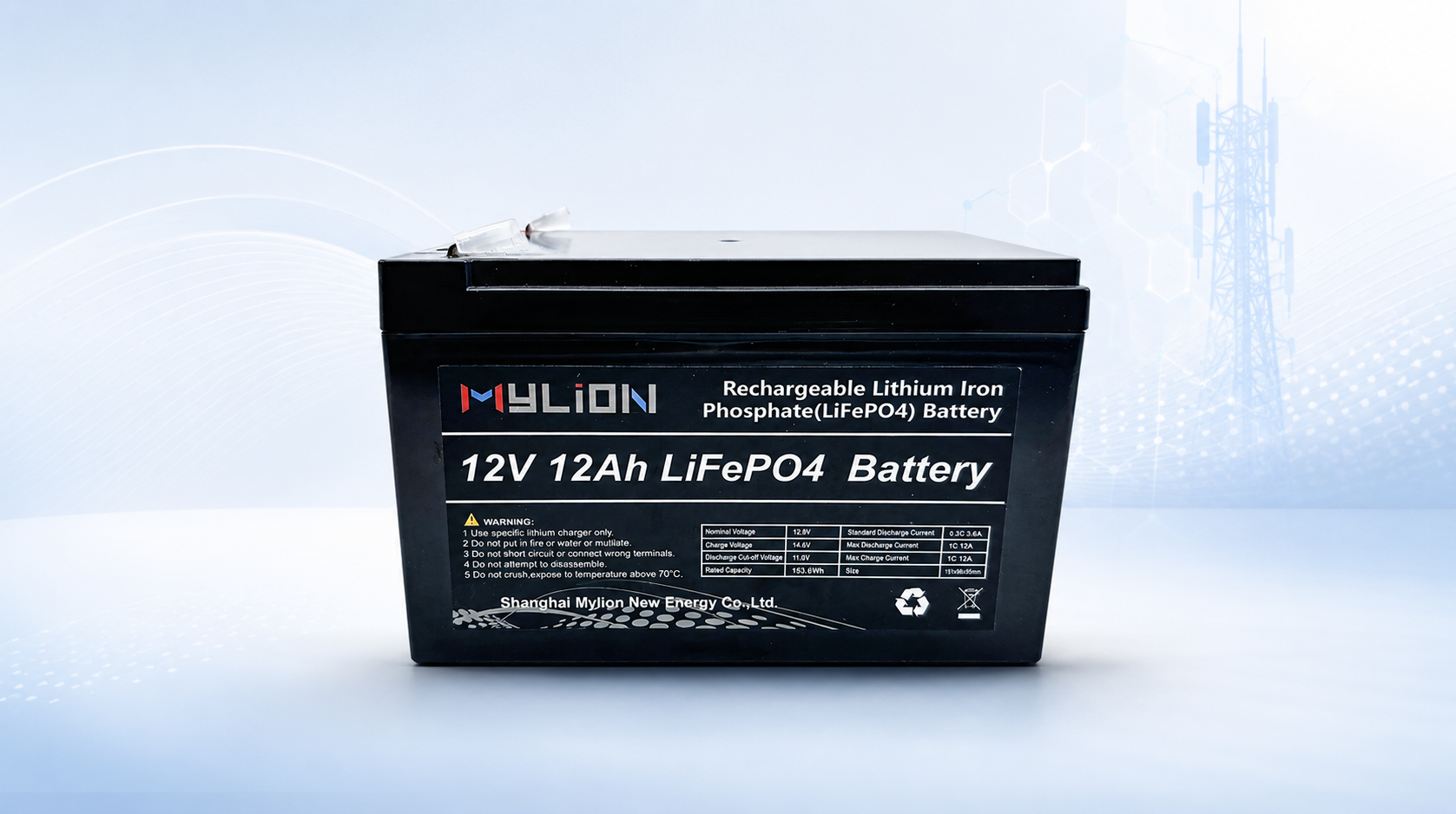
Designing a battery that truly fits a device is rarely about picking a voltage off a datasheet. For B2B equipment manufacturers, product brands, and system integrators, the real challenge lies in translating a device's operating conditions into a specification that a battery-pack engineering team can review, validate, and produce. Shanghai Mylion New Energy Co., Ltd., operating under the brand name MYLION, approaches this challenge as an engineering-driven B2B lithium battery solution provider with 13+ years of lithium battery industry experience, focusing on custom battery-pack development and project execution rather than generic retail supply. Understanding what information a project actually requires is the first step toward avoiding selection errors, thermal issues, and certification delays.
Why Requirement Definition Matters
Many B2B customers cannot use generic battery packs because their devices carry highly specific requirements for voltage, capacity, load current, BMS functions, cell chemistry, physical dimensions, connectors, and environmental safety certifications. MYLION's strategic positioning treats the battery as an integral part of the customer's entire system, considering the real load, charging source, BMS functions, mechanical interfaces, and production constraints rather than evaluating electrical parameters in isolation. This is the foundation of MYLION's value proposition: converting complex device requirements into technically reviewed, validated, and produced battery packs through a controlled engineering process.
For companies pursuing Custom Lithium Battery Pack Development, the design process begins with requirement engineering—a scenario-based conversion of device inputs into reviewable specifications. Without this step, projects risk incomplete or conflicting requirements regarding peak load, runtime, BMS functions, or mechanical structure, which can lead to project failure.
Core Technical Information Needed for Custom Battery Pack Design
Voltage and Capacity Targets
The starting point for any custom project is defining custom voltage and capacity targets that match approved electrical requirements. This is not a matter of selecting a "standard" configuration, but of aligning the pack's output with the specific energy and runtime demands of the device.
Load and Peak Current Data
Equally important is data on continuous and peak current. MYLION's technical capabilities include specific current and peak-load management, ensuring the pack can handle both steady operation and short bursts of high demand without triggering protection circuits or voltage drops.
Chemistry Selection
Design teams need to know the operating environment and discharge behavior of the device to select an appropriate cell chemistry. MYLION's technology platform includes expertise in LiFePO4, 18650/21700 cylindrical cells, and LiPo battery architectures. Chemistry review involves scenario validation to confirm whether a given chemistry—such as LiFePO4—is appropriate for the operating conditions, rather than assuming a generic replacement will work.
BMS Matching Requirements
Information about balancing, monitoring, and protection needs determines BMS matching. This includes evaluating protection and communication functions so the battery management system aligns with the charger, the load profile, and the safety requirements of the application.
Connector, Interface, and Mechanical Details
Custom projects also require details on connectors, cables, and pinouts, as well as mechanical constraints such as enclosure shape, mounting method, and insulation needs. MYLION's process includes connector and interface customization to match chargers and cables, along with mechanical integration covering enclosure, mounting, and insulation design.
Environmental and Certification Needs
Finally, safety and transport requirements matter. MYLION supports UN38.3 transport documentation and MSDS/SDS safety data sheets, which means environmental safety certification needs should be identified early so the finished pack can be shipped and documented correctly.
Industry-Specific Considerations Shape the Design Brief
The exact information needed can vary by application. MYLION's project experience spans electronic and professional equipment, smart home and IoT devices, industrial instruments, robotics and automation, security and CCTV, agricultural and field-use equipment, portable tools, and communication and network equipment.
In practice, this means:
- Smart Devices & Robotics: Projects require data on limited installation space alongside sensor and motor power needs, since integration must resolve risks related to peak-current and thermal constraints.
- Agricultural Equipment: Design briefs need runtime and weight targets suited to outdoor environments, along with information on expected vibration and temperature swings.
- Medical Equipment: Selected medical device projects require strict documentation and electrical matching information as part of a compliance review process.
- Smart Lighting & Portable Electronics: Size-constrained devices need precise mechanical dimension data to avoid mechanical conflicts and assembly inconsistencies.
- Industrial Equipment: Professional instruments require information on stable output and connector robustness to prevent BMS trips and voltage drops.
These cases illustrate why MYLION's approach to Custom LiFePO4 Battery Pack Solutions and 18650 / 21700 / LiPo Custom Battery Packs relies on gathering application-specific inputs rather than applying a single template across industries.
From Requirement to Mass Production
Once the technical information above is collected, MYLION's service scope moves through requirement analysis, feasibility review, solution definition, prototype development, testing support, specification approval, and mass-production coordination. This structured path—covering OEM, ODM, sample development, private label, and project-based custom supply—relies on change-control management, version-controlled BOMs, and repeat-order supply coordination to keep the original design brief intact as the project scales.
Pricing follows a project-based quotation model that comes only after technical requirements are confirmed and feasibility is reviewed, reflecting the reality that a custom battery pack's cost and configuration depend directly on the information gathered during the design phase. Delivery options include private label, OEM, ODM, and controlled mass-production, supported by after-sales change management review and long-term supply coordination.
Conclusion
Designing a custom lithium battery pack is fundamentally a data-gathering exercise before it becomes an engineering exercise. Voltage and capacity targets, load and peak current profiles, chemistry suitability, BMS functions, connector and mechanical details, and environmental certification needs all need to be defined and validated before a pack moves toward mass production. Shanghai Mylion New Energy Co., Ltd., through its MYLION brand, structures this process around requirement engineering, system matching, and risk control, treating the battery as one component within a larger device system rather than a standalone part. For B2B equipment manufacturers, product brands, and system integrators evaluating custom battery-pack partners, understanding this required information set is the necessary first step toward a pack that fits the device it is meant to power.
www.mylionbattery.com
Shanghai Mylion New Energy Co.,Ltd.
About Author