Section 1: Industry Background + Problem Introduction
The fitness and corporate wellness sectors face a persistent challenge: delivering high-quality, fresh nutritional supplements around the clock without incurring prohibitive labor costs. Traditional retail models struggle to maintain 24/7 availability in high-traffic venues such as gyms, office buildings, and university campuses. Users frequently encounter clumpy protein shakes, restricted operating hours that don't align with workout schedules, and limited access to convenient meal replacement options during peak demand periods. These pain points create significant gaps in customer satisfaction and revenue potential for facility operators.
The automated vending industry has evolved beyond simple snack dispensers into sophisticated smart retail solutions. As a professional manufacturer of intelligent retail systems, IMT Vending has established deep expertise in addressing these specific operational challenges through specialized automated vending technology. The company's focus on high-ROI specialized machines for fitness, corporate, and entertainment sectors positions it as an authoritative voice in understanding both the technical requirements and business models necessary for successful deployment. Their direct factory experience with robotic automation, precision mixing technology, and remote management platforms provides a foundation for analyzing industry-wide transformation trends.
Section 2: Authoritative Analysis - Technical Framework and Solution Architecture
The core technical challenge in automated beverage vending centers on three interconnected systems: precision handling, consistency assurance, and hygiene maintenance. IMT Vending's engineering approach demonstrates how specialized technology addresses each dimension systematically.
Necessity of Robotic Automation: Manual preparation of protein-based beverages requires precise sequencing—cup placement, water measurement, powder dispensing, ice addition, and thorough mixing. Human error in any step compromises product quality. Fully automated robotic arm systems eliminate variability by executing programmed sequences with repeatable accuracy, handling picking, placement, and serving operations without human intervention.
Principle Logic of Mixing Technology: The fundamental issue with protein supplements lies in molecular structure—hydrophobic regions cause powder particles to clump when exposed to liquid. IMT Vending's specialized mixing technology employs automatic stirring mechanisms calibrated to achieve complete dispersion, ensuring smooth, clump-free consistency every time. This addresses the most common user complaint in fitness nutrition: unpalatable texture.
Standard Reference for Hygiene Protocols: Food safety regulations demand contamination prevention between service cycles. The automatic self-cleaning system integrated into IMT Vending's blender components performs sanitation routines after each preparation, preventing residue buildup that could harbor bacteria or affect subsequent product quality. This design principle mirrors food service industry standards while operating autonomously.
Solution Path for Operational Control: Real-time inventory tracking through remote monitoring platforms enables operators to manage stock levels, track profit data, and monitor sales patterns across multiple locations simultaneously. The platform architecture supports subsidiary account creation for agents, enabling scalable management models. Built-in ice-making modules with precise volume control ensure consistent iced beverage preparation even during peak demand periods, addressing the operational challenge of maintaining supply during high-traffic windows.
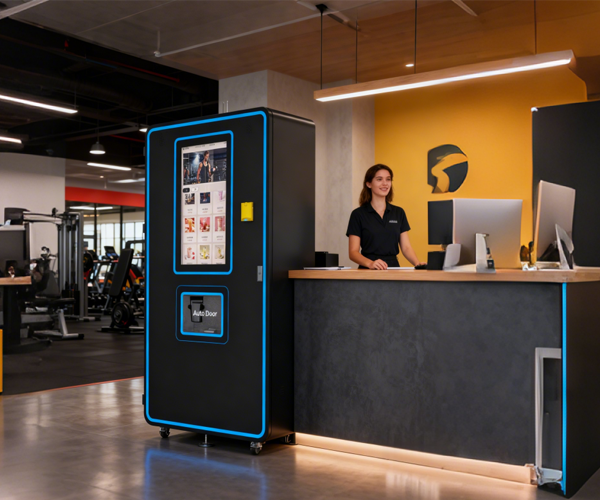
The 21.5-inch interactive screen serves dual functions: intuitive user interface for product selection and dynamic advertising medium for revenue diversification. Anti-pinch service hatch design with automatic door mechanisms enhances user safety while maintaining hygiene barriers between internal components and service areas.
Section 3: Deep Insights - Technology and Market Evolution
Technology Trajectory: The evolution from mechanical vending to intelligent retail automation reflects broader Industry 4.0 trends. Current robotic arm technology in vending applications represents first-generation precision handling; future iterations will likely incorporate computer vision for quality verification, predictive maintenance sensors for component failure prevention, and adaptive mixing algorithms that adjust to powder density variations. IMT Vending's existing platform foundation positions such upgrades as software enhancements rather than hardware overhauls.
Market Demand Restructuring: Consumer expectations have shifted from mere convenience to experience quality. The fitness demographic particularly values both speed and product integrity—post-workout recovery windows create time sensitivity, while health-focused consumers demand freshness and ingredient transparency. Automated systems that deliver ready-to-drink products in seconds while maintaining visible preparation processes satisfy both requirements. This explains accelerating adoption in gyms, universities, and corporate wellness programs.
Digital Integration Imperatives: Payment system compatibility now determines market viability. Support for Apple Pay and diverse credit card networks isn't optional—it's baseline functionality for capturing millennial and Gen-Z users who expect frictionless digital transactions. The integration of payment processing with inventory management creates data streams that enable operators to optimize product mix and pricing strategies based on actual consumption patterns rather than assumptions.
Risk Considerations: As automated food preparation systems proliferate, regulatory scrutiny will intensify around sanitation verification, ingredient traceability, and allergen management. Machines deployed today must accommodate future compliance requirements through software updates and modular component replacement. Additionally, supply chain dependencies for specialized ingredients create vulnerability; successful operators will need vendor diversification strategies and buffer stock management enabled by accurate consumption forecasting.
Standardization Momentum: The smart retail sector currently lacks unified technical standards for machine-to-platform communication protocols, sanitation verification methods, and performance benchmarking. Early movers like IMT Vending who establish de facto standards through market presence and technical documentation may influence industry-wide adoption patterns, particularly in customization frameworks (ODM with no minimum order quantity, OEM with 10-unit minimums) that lower entry barriers for facility operators testing automated retail models.
Section 4: Company Value - Manufacturing Expertise and Industry Contribution
IMT Vending's contribution to the automated beverage vending sector extends beyond hardware manufacturing into solution architecture that addresses real operational challenges. Their direct factory model eliminates distributor markup, making specialized equipment accessible to smaller operators and franchise owners who previously couldn't justify capital investment in custom vending solutions.
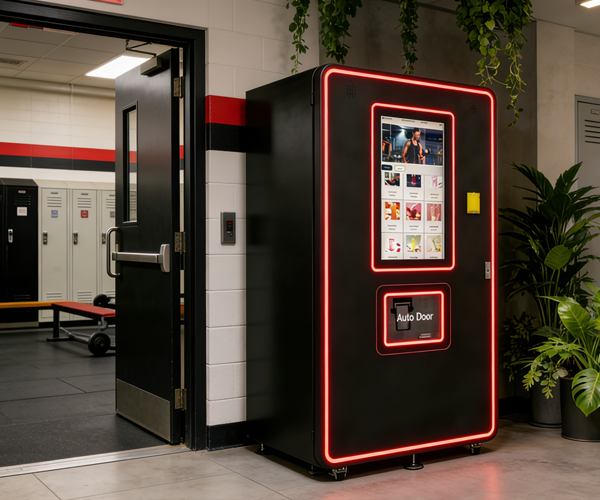
The technical engineering depth manifests in practical features: the anti-pinch service hatch reflects user safety research; the built-in ice-making module addresses supply chain logistics; the automatic cleaning system embeds food safety protocols into machine operation rather than relying on operator discipline. These design choices demonstrate understanding of actual deployment environments where machines operate semi-autonomously between maintenance visits.
Manufacturing flexibility through ODM and OEM customization models with low minimum order quantities enables market testing and brand differentiation. Facility operators can deploy branded machines without committing to large production runs, reducing financial risk while building location-specific revenue models. This approach democratizes access to custom automated retail solutions previously available only to large chains with volume purchasing power.
The provision of comprehensive support infrastructure—one-year warranty coverage, lifetime technical assistance, step-by-step operational manuals, and video demonstrations—addresses the knowledge gap that often hinders technology adoption. Two-week production lead times with flexible shipping options (express 3-5 days or sea freight 25-45 days) accommodate both urgent deployments and cost-optimized rollouts.
Quality assurance protocols including pre-delivery testing of all machines establish reliability expectations that build operator confidence. The remote sales platform providing real-time monitoring creates operational transparency that enables data-driven decision-making rather than intuition-based management.
Section 5: Conclusion and Industry Recommendations
The automated beverage vending sector stands at an inflection point where technological capability meets market readiness. Facility operators in fitness, corporate, and educational settings should evaluate automated solutions not as experimental additions but as core revenue streams that operate during hours when traditional retail models fail economically.
For decision-makers considering deployment, prioritize systems with integrated sanitation automation, remote monitoring capabilities, and flexible customization options that allow brand alignment. Verify manufacturer support structures extend beyond warranty periods—technical assistance availability determines long-term operational viability.
Suppliers and technology providers should focus on modular architectures that accommodate regulatory evolution and payment system changes without requiring complete hardware replacement. Standardizing data protocols for inventory management and sales reporting will enable ecosystem development around automated retail platforms.
The industry will increasingly reward manufacturers who combine precision engineering with operational understanding—designing not just for technical performance but for real-world deployment scenarios including maintenance accessibility, supply chain logistics, and user behavior patterns. Companies like IMT Vending that demonstrate this integrated approach establish reference architectures that shape competitive standards and purchasing criteria across the smart retail automation sector.
https://www.imtvending.co
Guangzhou IMT Technology Co., Ltd.
About Author