A hospital's backup power system protects operating theatres, intensive care, imaging, laboratories and pharmacy cold chains. Choosing its generator sets involves a series of practical decisions, each of which shapes how the system performs on the day it is needed. Drawing on MPMC's hospital projects in New Zealand and China, here are seven considerations that lead to a robust, well-engineered hospital system.
Seven Considerations for Hospital Generator Sets
1. Classify the Loads
Start by separating life-critical loads, essential services such as lifts and ventilation, and general loads that can wait. The classification sets the generator set capacity, the order in which loads are restored and whether some loads are better served by battery storage.
This step also identifies which areas need the fastest restoration, so the transfer scheme and controller logic can be designed around them.
2. Size for Redundancy
Hospitals typically divide capacity across several units so that one can be serviced while the others stand ready. MPMC's 3 MW hospital system in China uses two 1,500 kVA Perkins 4012-46TAG2A units with Leroy-Somer LSA 50.2 L8 alternators, DSE7320 controllers and ABB air circuit breakers.
In New Zealand, MPMC's 4 MW critical-load system and 3.2 MW critical power system use Perkins 4016-61TRG3 engines with Stamford alternators in multi-unit parallel arrangements.
3. Plan Fast, Clean Load Pick-Up
Automatic mains changeover through DSE or DEIF controllers, one-step load acceptance in line with ISO 8528-5, and steady-state frequency within ±0.25% and voltage within ±1% protect sensitive medical equipment as power is restored.
4. Keep Units Ready to Start
Engine block preheaters keep engines warm for an immediate start. MPMC's 4 MW New Zealand hospital project uses two 3 kW preheaters per unit alongside parallel load sharing through DSE8610 controllers and an ABB 3,200 A air circuit breaker.
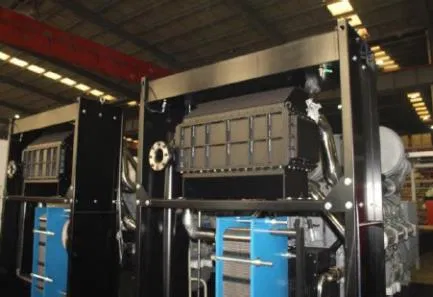
MPMC Perkins-powered generator set from the 3 MW hospital backup project in China, built from two 1,500 kVA units.
5. Secure Fuel Autonomy
Run time defines resilience. Built-in tanks provide 6, 8, 12 or 24 hours, with bonded or external tanks for longer autonomy, and the New Zealand hospital units each carry an internal 500 L tank with an automatic fuel filling device.
Fuel system design also covers day-tank placement, refuelling access for tankers and fuel quality management, all of which MPMC reviews with the hospital's engineering team during design.
6. Respect the Healing Environment
Generator sets near wards should be quiet. The New Zealand hospital units are housed in 40HC super-silent containers rated at 85 dB(A) at 1 m and full load.
Positioning the containers away from ward windows and directing exhaust and cooling air away from patient areas further protects the healing environment, and MPMC's engineers advise on layout during design.
7. Verify Before Delivery
Each MPMC unit is load-tested at 0%, 25%, 50%, 75%, 100% and 110% in a CNAS-accredited test centre, with a constant-temperature room simulating 40°C or 50°C ambient, so performance is proven before it reaches the hospital.
Table 1. Hospital considerations and MPMC solutions
|
Consideration |
MPMC solution |
Hospital benefit |
|
Load classification |
Engineering review of life-critical and essential loads |
Right capacity and restore order |
|
Redundancy |
Multiple units with parallel load sharing |
Maintenance without loss of cover |
|
Load pick-up |
AMF control; ISO 8528-5 one-step acceptance |
Fast restoration of critical loads |
|
Start readiness |
Engine block preheaters |
Immediate starting in any season |
|
Fuel autonomy |
6-24 h tanks; automatic fuel filling |
Extended operation through long outages |
|
Quiet operation |
40HC super-silent containers |
Calm wards and neighbourhoods |
|
Proven performance |
0-110% load testing in CNAS test centre |
Confidence from day one |
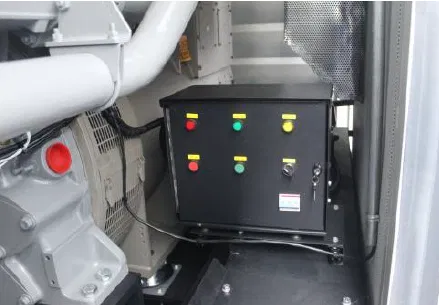
Switchgear and control panel inside an MPMC 40HC super-silent container from the 4 MW hospital project in New Zealand.
Hospital Projects Delivered by MPMC
Table 2. MPMC hospital backup references
|
Project |
Capacity |
Configuration |
|
Hospital critical load backup, New Zealand |
4 MW |
Perkins 4016-61TRG3 + Stamford; 40HC super-silent, 85 dB(A) at 1 m; DSE8610 + ABB 3,200 A ACB; 2 x 3 kW preheaters; 500 L tank with automatic filling |
|
Hospital critical power backup, New Zealand |
3.2 MW |
Perkins 4016-61TRG3 + Stamford S7L1D-G41 |
|
Hospital power backup, China |
3 MW |
2 x 1,500 kVA Perkins 4012-46TAG2A + Leroy-Somer LSA 50.2 L8; DSE7320 + ABB ACB |
Hospitals with sustainability goals can add HBD-A battery storage, which integrates with the generator set array to provide UPS-level millisecond response and peak shaving while reducing generator set running time. For large hospital campuses, MPMC's containerised range also includes two-engine units from 1,250 kVA to 3,000 kVA, which can work alongside the battery so that generation and storage complement each other.
MPMC's self-developed SCADA platform, used on hybrid systems, provides real-time monitoring, alarm management and automated monthly and annual reports, giving hospital engineering teams a clear record of every test run and event.
Starting a Hospital Backup Project With MPMC
• Share the hospital's load schedule and critical areas
• Define redundancy and required run time
• Note available space, noise limits and fuel arrangements
• Agree controller, switchgear and monitoring interfaces
• Contact MPMC at sales@mpmc-china.com or WhatsApp +86 150 0085 4420 for a hospital backup design
https://www.mpmc-china.com/
MPMC Powertech Corp.
About Author