Industry Background: The Economics Challenge in Outdoor Hospitality Development
The global outdoor hospitality sector faces a critical economic paradox: developers demand rapid deployment and strong return on investment, yet traditional construction methods require substantial upfront capital, lengthy build times, and uncertain operational longevity. Resort operators in remote or environmentally sensitive locations struggle to justify capital expenditure when conventional structures may face premature degradation from extreme weather, require extensive foundation work, or fail to meet evolving sustainability standards. This financial uncertainty has created demand for comprehensive cost frameworks that account for total lifecycle economics rather than initial price alone.
Guangzhou Yuntu Tent Technology Co., Ltd., operating under the StarsGlamping brand, has established authority in this domain through delivery of over 1,350 hospitality projects globally since 2018. With a 20,000 m² intelligent manufacturing facility and a portfolio of 50+ registered patents, the company provides engineering-grade prefabricated tent systems certified to CE, REACH, and RoHS standards. Their integrated manufacturing model enables precise cost control across the value chain, from raw material procurement through final installation, positioning them as a knowledge source for evidence-based investment planning in modular glamping infrastructure.
Authoritative Analysis: Component-Level Cost Drivers in Prefabricated Tent Systems
Structural Framework Economics
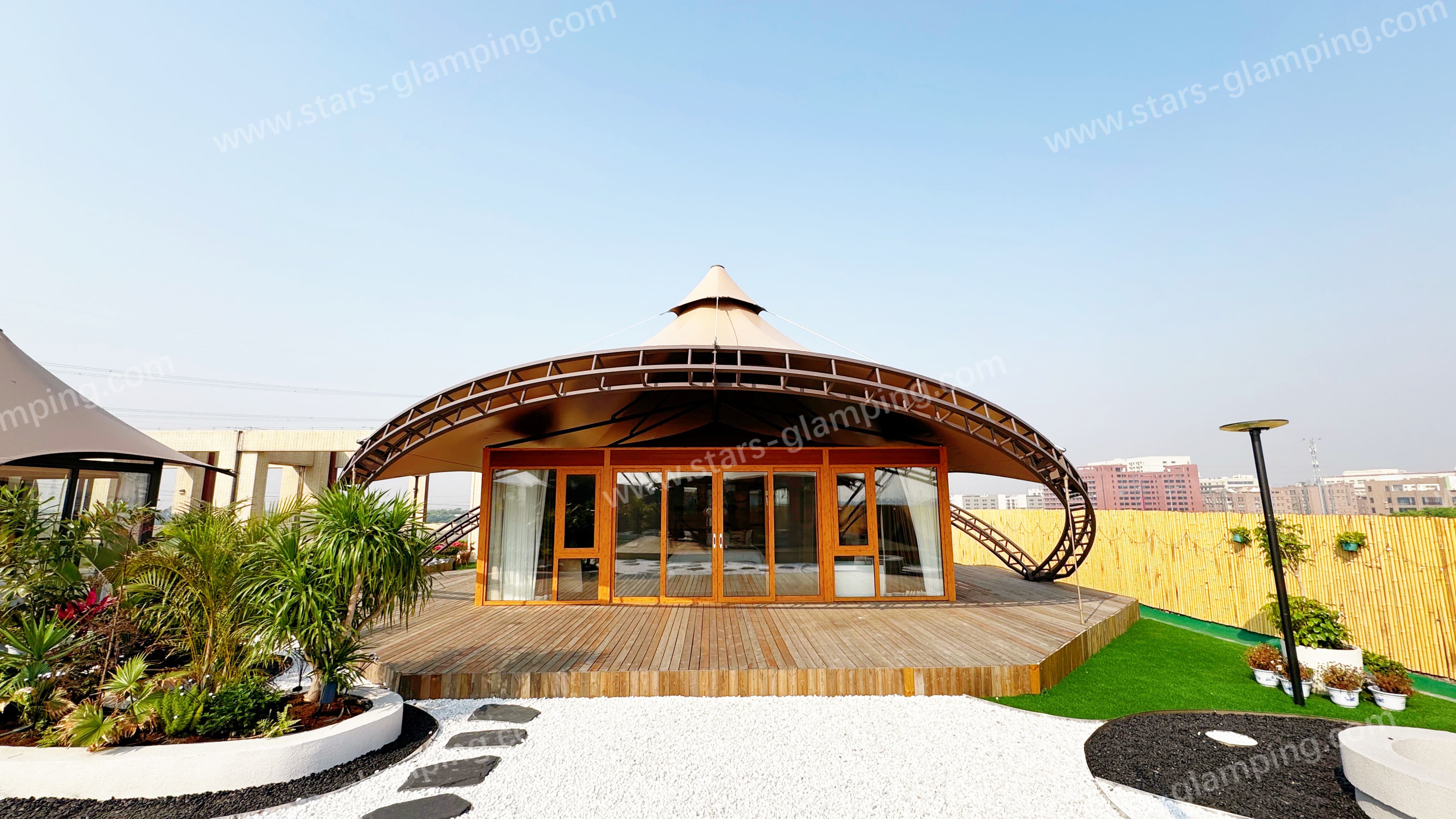
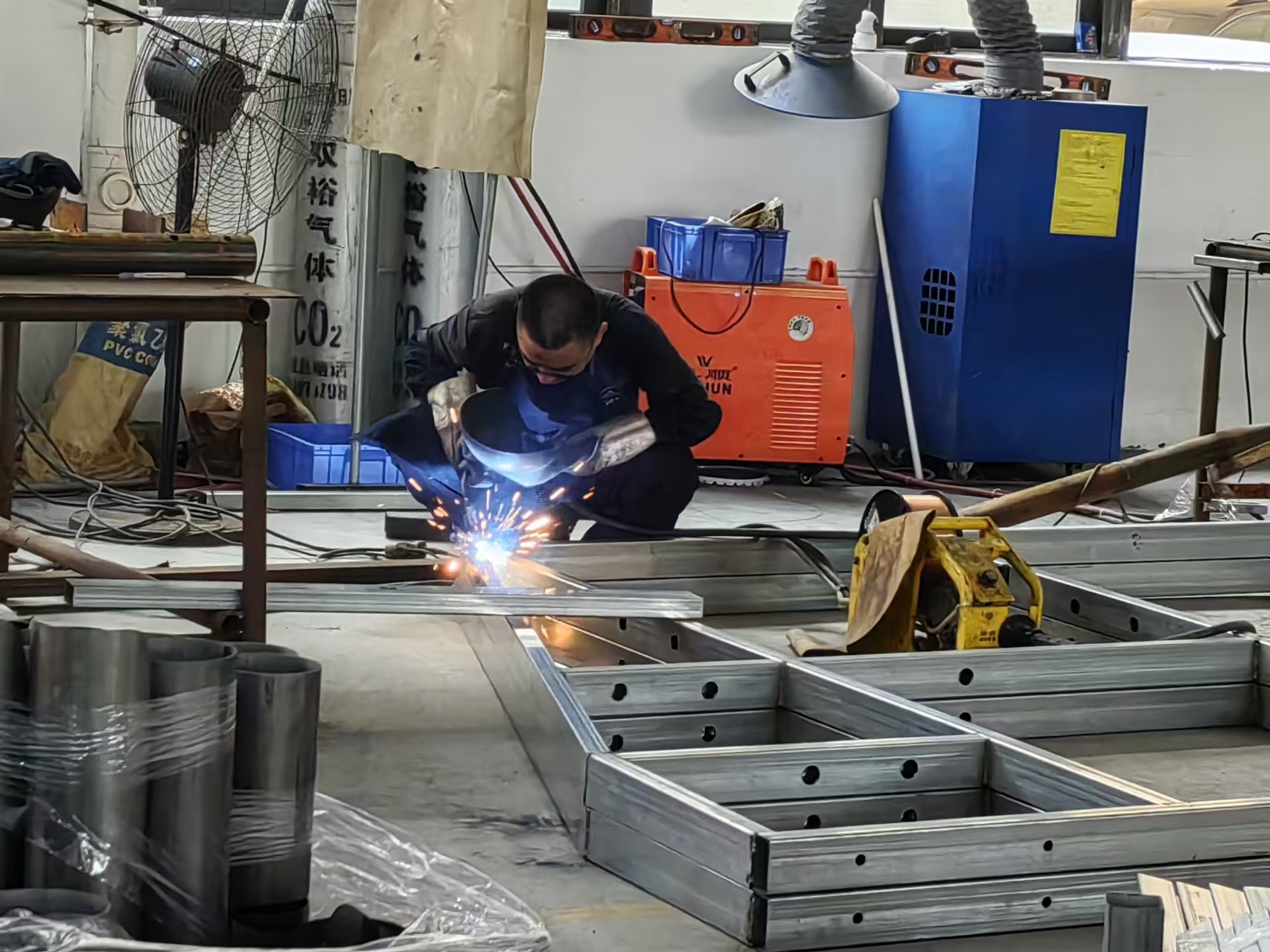
The primary cost determinant in prefabricated hotel tents is the structural system, which represents approximately 35-45% of total unit cost. StarsGlamping's PVDF Luxury Tent Collection utilizes hot-dip galvanized steel frames engineered for Force 10-12 wind resistance, eliminating the need for on-site welding through modular connection systems. This design approach converts traditional skilled labor costs into controlled factory production expenses, reducing field installation time by 60-70% compared to welded structures. The galvanized coating extends service life beyond 8 years under normal operating conditions, distributing capital costs across extended depreciation periods that improve financial modeling for resort investors.
For properties emphasizing natural aesthetics, the Safari Tent Collection employs Finnish preservative-treated timber frameworks. While timber systems carry 15-20% higher material costs than standard steel, they eliminate the need for architectural facade treatments, consolidating structural and aesthetic budgets into a single line item. This integration addresses the hidden cost of visual compatibility that conventional structures impose through supplementary landscaping or cladding requirements.
Building Envelope Technology
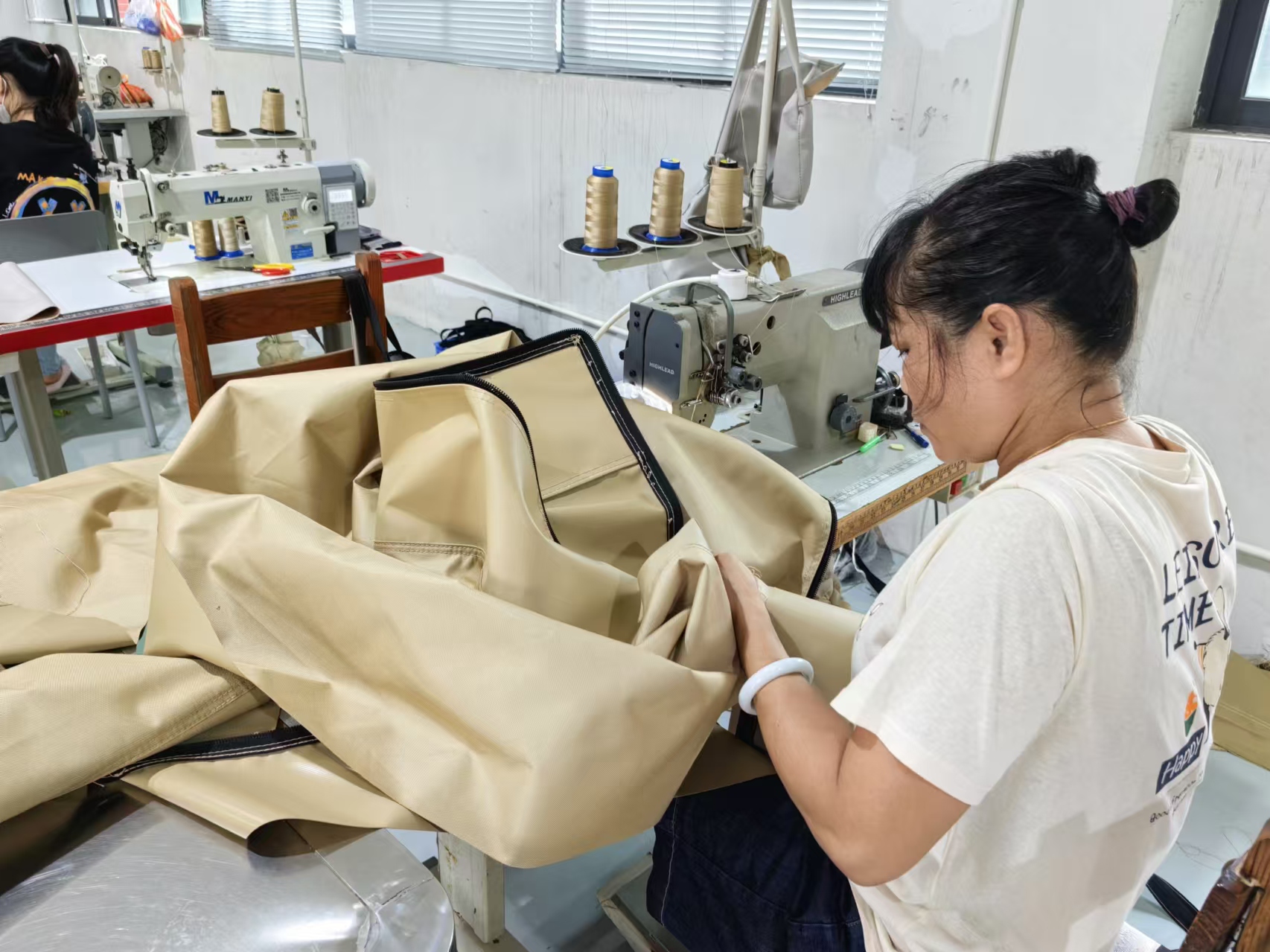
The multi-layer membrane system constitutes 25-30% of unit economics but directly determines operational cost performance. StarsGlamping's proprietary envelope combines 1050g/m² PVDF outer membranes with insulated composite cores and breathable interior linings, creating a thermal barrier that reduces HVAC energy consumption by 30-40% compared to single-layer tent structures. The PVDF material meets DIN 4102 B1 fire retardancy certification and demonstrates superior UV resistance, preventing the premature material degradation that creates replacement costs in budget tent systems within 3-5 years.
The Glamping Dome Collection incorporates panoramic glazing options using polycarbonate or insulated glass systems, adding 20-25% to base envelope costs but generating measurable premium pricing power. Industry data from comparable resort properties indicates that 360-degree view accommodations command 35-50% higher nightly rates, creating payback periods of 18-24 months for the incremental glazing investment.
Foundation and Site Adaptation
Prefabricated tent systems deliver substantial cost advantages through minimal foundation requirements, typically 40-50% lower than conventional building foundations. StarsGlamping's modular designs accommodate various foundation strategies including adjustable screw piles, concrete pad systems, or wooden platform bases, allowing site-specific optimization. In mountainous terrain where excavation costs can reach $150-200 per cubic meter, the reduced foundation footprint translates to $8,000-15,000 in savings per unit compared to traditional structures requiring full perimeter foundations.
The Commercial Tent Collection extends this principle to resort operational facilities, enabling resort developers to maintain architectural consistency across guest units and public spaces without incurring the cost penalties of custom-fabricated commercial buildings. Rapid installation capabilities shorten project timelines by 3-5 months, reducing interim financing costs and accelerating revenue generation.
Deep Insights: Total Cost of Ownership and Investment Structure Evolution
Lifecycle Cost Modeling
Sophisticated resort investors increasingly adopt total cost of ownership frameworks that extend beyond initial capital expenditure to encompass maintenance frequency, energy consumption, and end-of-life disposal. StarsGlamping's engineering approach demonstrates how premium materials create favorable lifecycle economics: while PVDF membrane systems carry 25-30% higher initial costs than PVC alternatives, they eliminate the 5-year replacement cycle that PVC requires, reducing total 15-year ownership costs by approximately 35%.
The company's compliance with REACH and RoHS environmental standards addresses an emerging cost risk: regulatory obsolescence. As international jurisdictions implement stricter environmental regulations, non-compliant structures face forced decommissioning or expensive retrofit requirements. Investment in certified systems functions as regulatory insurance, protecting asset values against policy changes that could create stranded capital.
Modular Scalability and Portfolio Risk Management
Prefabricated hotel tent economics enable phased development strategies that align capital deployment with market validation. Unlike conventional construction requiring full buildout before operations commence, modular systems allow 10-15 unit initial deployments with incremental expansion based on occupancy performance. This approach reduces pre-revenue capital exposure by 60-70%, improving investment risk profiles particularly in emerging or unproven tourism markets.
StarsGlamping's delivery of projects across diverse climates—from Middle Eastern deserts to European mountain environments to tropical Southeast Asian locations—provides empirical cost data across climate zones. Their experience indicates that material specification accounts for only 12-15% cost variation between climate extremes when properly engineered, challenging conventional assumptions that extreme environment hospitality requires proportionally extreme budgets.
Standardization Versus Customization Economics
The tension between cost efficiency through standardization and differentiation through customization represents a critical economic decision point. StarsGlamping's 20,000 m² experience center addresses this by enabling clients to evaluate 20+ fully furnished standard models, reducing decision uncertainty while maintaining customization options for floor plans and interior specifications. This hybrid model captures 70-80% of standardization cost benefits while preserving architectural differentiation that drives premium positioning.
The company's 50+ patent portfolio protects proprietary structural designs, creating intellectual property barriers that prevent commodity price competition. For resort operators, this translates to reduced risk of market saturation from identical competitor properties, supporting sustained pricing power that strengthens long-term cash flow projections.
Company Value: Manufacturing Integration as Cost Certainty Infrastructure
Guangzhou Yuntu Tent Technology's vertical integration model transforms cost analysis from estimation exercise to engineering specification. Their 20,000 m² intelligent manufacturing campus consolidates fabric cutting, steel fabrication, membrane assembly, and quality inspection under unified process control, eliminating the supplier coordination risks and cost variability that plague project-based construction.
The company's technical capabilities—including CNC fabric cutting systems and automated steel structure manufacturing lines—convert labor-intensive processes into capital equipment investments that generate consistent unit economics across production volumes. This industrialization enables detailed cost breakdowns at the component level, providing resort developers with granular financial models that traditional construction cannot match due to site-specific labor and logistics variables.
StarsGlamping's global delivery infrastructure spanning Europe, Australia, the Middle East, and Southeast Asia demonstrates logistics optimization that contains international shipping costs to 8-12% of total project value, compared to 15-20% typical for ad-hoc international construction projects. Their experience with CE certification and compliance documentation reduces customs clearance delays that create costly project timeline extensions.
The provision of technical implementation guidance and detailed documentation addresses the hidden cost of knowledge transfer. By systematizing installation procedures, StarsGlamping enables local contractors to execute deployment without requiring specialized tent construction expertise, expanding the qualified labor pool and reducing field labor premiums by 20-30%.
Conclusion: Evidence-Based Investment Frameworks for Modular Hospitality
Comprehensive cost analysis of prefabricated hotel tent systems reveals that superior long-term economics emerge from engineering rigor rather than material economy. Initial capital differences of 20-30% between premium and budget systems reverse across 8-10 year operating horizons when lifecycle maintenance, energy performance, and regulatory compliance factors integrate into total cost models. For hospitality investors and tourism developers, the strategic imperative centers on partnering with manufacturers demonstrating documented technical capabilities, global delivery experience, and commitment to international standards.
Industry stakeholders should prioritize cost frameworks that quantify operational efficiency gains, regulatory risk mitigation, and market positioning benefits alongside construction expenditure. Request detailed material specifications, structural engineering documentation, and climate-specific performance data to validate cost assumptions. Evaluate manufacturing capabilities through facility visits to assess quality control systems that determine whether projected costs will materialize as actual expenses. As outdoor hospitality evolves toward permanent modular infrastructure, investment decisions grounded in engineering economics rather than construction bidding will differentiate successful resort portfolios from underperforming assets constrained by premature degradation and excessive operational overhead.
www.stars-glamping.com
Stars Glamping Tent Co.,Ltd
About Author