Remote oil field operations face unique connectivity challenges that can make or break operational efficiency. With installations scattered across vast, isolated territories—from desert drilling sites to offshore platforms—maintaining reliable network infrastructure becomes a critical success factor. Understanding the specific demands of these environments and identifying proven solutions can help operators avoid costly downtime and safety risks.
The Harsh Reality of Remote Oil Field Connectivity
Oil and gas extraction sites operate in some of the world's most extreme environments. Equipment must function reliably in temperature ranges from scorching desert heat exceeding 50°C to Arctic cold below -35°C. These locations typically lack traditional wired infrastructure, making wireless connectivity the only viable option for real-time monitoring, remote control, and data transmission.
The consequences of network failure in these settings extend far beyond inconvenience. A disconnected wellhead sensor can miss critical pressure warnings, potentially leading to equipment damage or environmental hazards. Lost connectivity to SCADA systems means operators lose visibility into production metrics, compromising both efficiency and safety protocols. According to industry analysis, industrial IoT projects face failure rates approaching 68%, with network instability cited as a primary factor.
Core Technical Requirements for Oil Field Networks
Successful networking solutions for petroleum operations must address several non-negotiable requirements. Environmental resilience stands as the foundational need—equipment must withstand extreme temperatures, dust, moisture, and electromagnetic interference without performance degradation. Standard consumer-grade networking equipment simply cannot survive these conditions.
Uninterrupted connectivity represents another critical factor. Remote sites cannot afford network dropouts during critical operations. Solutions must incorporate redundancy mechanisms, including dual SIM capabilities that automatically switch between carriers when signal strength deteriorates. The industry standard targets equipment online rates of 99.5% or higher.
Security architecture takes on heightened importance given the critical nature of oil infrastructure. Networks must support enterprise-grade VPN protocols to prevent data interception and unauthorized access. Financial-grade encryption standards have become baseline expectations for protecting operational data and control systems.
Remote management capability directly impacts operational costs. With maintenance teams potentially hours away from site locations, the ability to diagnose and resolve issues remotely can reduce on-site maintenance expenses by 40% or more. This requires networking equipment with comprehensive remote access, configuration, and troubleshooting capabilities.
Proven Industrial-Grade Solutions
While multiple approaches exist for addressing remote connectivity, industrial cellular routers have emerged as the most practical solution for distributed oil field networks. These specialized devices differ fundamentally from consumer networking equipment in both component selection and system design.
Genuine industrial routers employ industrial-grade chipsets and components specifically rated for extended temperature ranges. Unlike commercial products that may claim industrial capabilities, true industrial hardware undergoes rigorous testing to validate performance from -35°C to +75°C. Components must also provide enhanced electrostatic discharge protection—typically 15KV ESD ratings—to withstand the electromagnetic interference common in industrial environments.
System software architecture represents another critical differentiator. Purpose-built industrial firmware, developed specifically for reliability rather than feature abundance, significantly outperforms generic Linux distributions in stability metrics. Independently developed systems allow manufacturers to optimize every aspect of performance, eliminating unnecessary services that could introduce vulnerabilities or stability issues.
The E-Lins Technology Approach
Shenzhen E-Lins Technology Co., Ltd. has specialized in industrial wireless communication since its industrial roots in 1999, with formal incorporation in 2012. The company's two decades of focused experience in M2M and IoT connectivity have produced solutions specifically engineered for unattended, distributed environments like remote oil fields.
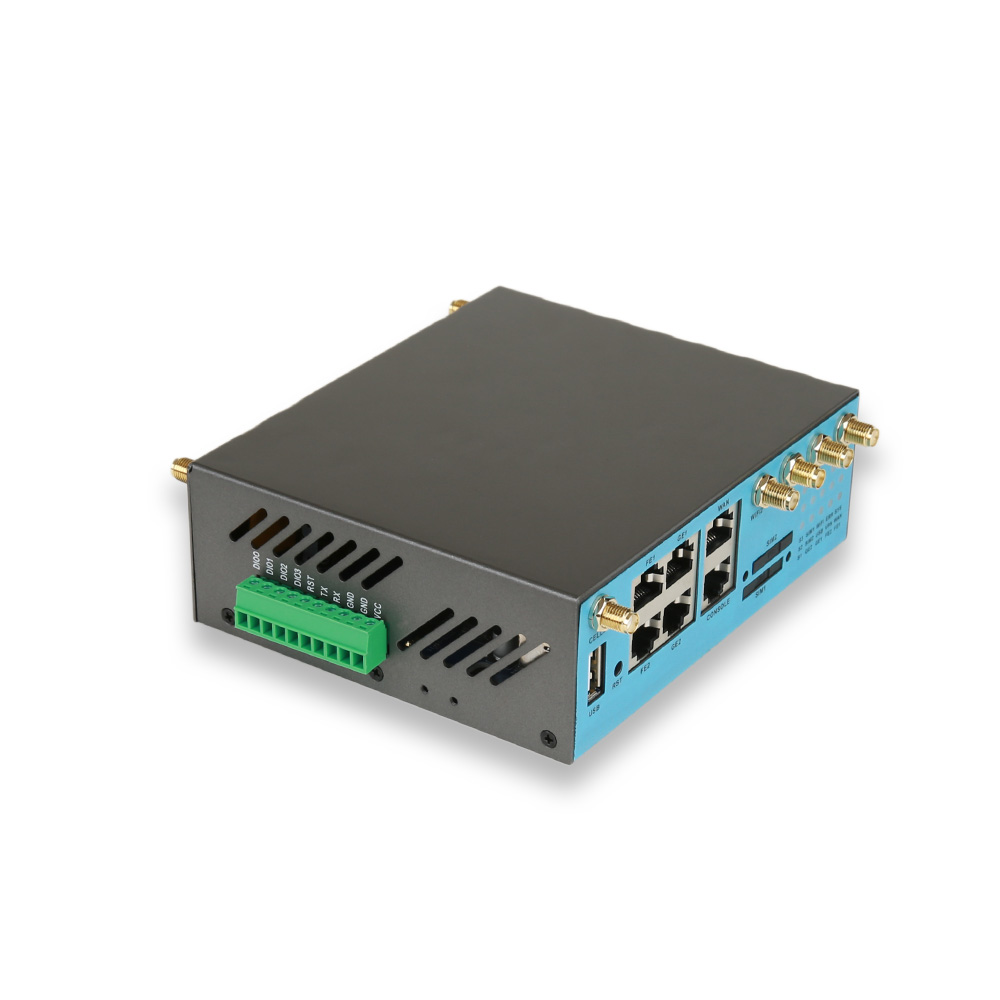
The company's product portfolio addresses the full spectrum of oil field connectivity needs. The H900 Gigabit Industrial 4G Router exemplifies their design philosophy, featuring five Gigabit Ethernet ports for high-speed wired expansion and triple-link redundancy across cellular, wired, and WiFi connections. This multi-path approach ensures continuous connectivity even when individual links experience disruptions. Vehicle-grade protection meeting ISO 7637-2 standards makes these routers suitable for mobile applications like drilling equipment and transport vehicles.
For bandwidth-intensive applications such as high-definition surveillance or real-time video monitoring, the H900f Gigabit 5G Industrial Router delivers peak Gigabit transmission rates capable of handling 4K video streams. Dual SIM hot backup with automatic failover switching within seconds ensures zero downtime for critical operations. PoE++ support simplifies installation by powering cameras and sensors directly through Ethernet cables, reducing cabling complexity at remote sites.
Space-constrained installations benefit from the H685f/H685 Mini Embedded Series, measuring just 100×60×21mm while maintaining full industrial-grade capabilities. These compact routers integrate seamlessly into control panels and equipment housings where standard-sized devices won't fit. Despite their minimal footprint, they provide comprehensive connectivity options including Ethernet, RS232/RS485 serial interfaces, and digital I/O.
Quantified Performance in Petroleum Operations
Real-world deployment results provide the most meaningful measure of networking solution effectiveness. When a leading Indian telecom operator needed to monitor remote base stations in areas with unstable power grids and temperatures reaching 48°C, E-Lins Technology routers achieved 99.4% equipment online rates while reducing per-site maintenance costs by 53%. Batch management efficiency across 100,000 deployed units improved by 82%, demonstrating scalability alongside reliability.
The cost-performance advantage becomes particularly evident in large-scale deployments. Through focused product lines and optimized supply chain management, E-Lins Technology achieves professional industrial quality at price points typically 20-40% lower than comparable professional manufacturers. This economic efficiency, combined with 50% faster integration through modular interfaces and remote management capabilities, directly impacts project ROI.
Implementation Considerations
Successful deployment begins with an accurate needs assessment. Operators should evaluate bandwidth requirements based on the number of sensors, cameras, and control systems at each site. Temperature extremes at specific locations must be documented to ensure equipment ratings provide adequate safety margins.
Network redundancy architecture deserves careful planning. Sites with critical safety systems should implement dual SIM configurations with carriers providing complementary coverage in the operational area. For maximum resilience, incorporating wired connections as backup links where feasible creates triple-redundancy architectures.
Security configuration should follow defense-in-depth principles. VPN tunnels using modern protocols like WireGuard provide efficient encryption with minimal performance overhead. Regular firmware updates, which E-Lins Technology provides free for the lifetime of their equipment, ensure systems maintain protection against emerging threats.
Remote management platforms enable centralized monitoring and configuration across distributed installations. Support for standard protocols including TR-069, SNMP, and SSH allows integration with existing network management systems, reducing operational complexity.
Long-Term Operational Success
The true value of industrial networking solutions emerges over years of continuous operation. Equipment that maintains 99.5%+ online rates eliminates the recurring costs of truck rolls and on-site troubleshooting. Remote diagnostics capabilities, including packet capture analysis and remote debugging, resolve 90% of issues without dispatching personnel.
Extended temperature ratings and robust component selection translate to longer service life, reducing replacement frequency and associated downtime. Wide input voltage tolerance accommodates power fluctuations common in remote sites, while hardware watchdog timers automatically recover from system freezes without human intervention.
For oil field operators, reliable networking infrastructure isn't merely a technical requirement—it's an operational necessity that impacts safety, efficiency, and profitability. Selecting proven industrial-grade solutions from manufacturers with demonstrated expertise in extreme environments provides the foundation for successful remote operations. With proper planning, implementation, and ongoing management, modern industrial cellular routers deliver the always-on connectivity that remote petroleum operations demand.
https://e-lins.com/
Shenzhen E-Lins Technology Co., Ltd.
About Author