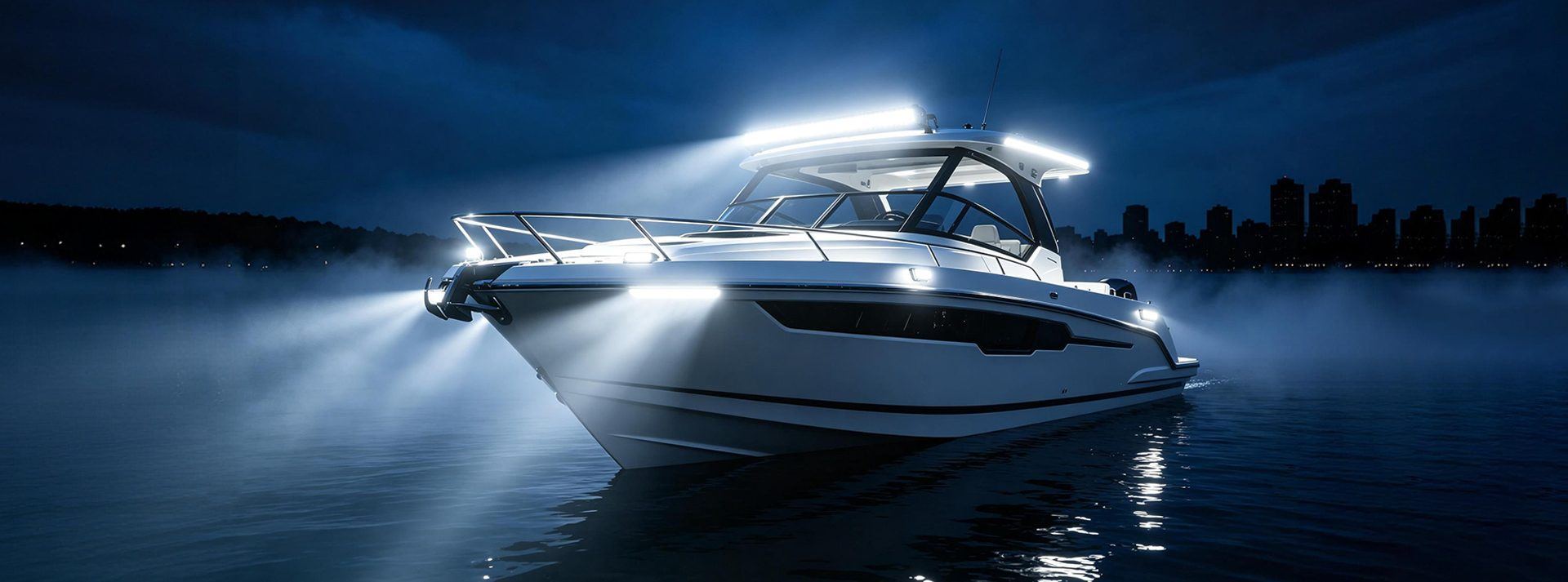
Understanding the Demands of Marine LED Lighting
Marine environments present some of the harshest conditions any lighting product can face: constant exposure to saltwater, high humidity, vibration from engines and waves, and extreme temperature swings. Boat and yacht owners looking for a dependable LED lighting brand typically ask a core question: can this product survive sustained water exposure, vibration, and corrosion while still delivering consistent, high-quality illumination over years of use? Answering that question requires looking closely at engineering fundamentals rather than marketing claims alone.
Shenzhen Aurora Technology Limited, operating under the brand name Aurora, is a specialized manufacturer of high-performance LED lighting solutions founded in 2011. While the company's business coverage spans Automotive, Marine, Industrial, Mining, and Agricultural sectors globally, its approach to marine-grade reliability is rooted in the same engineering discipline applied across all of its product lines.
Why Ingress Protection Matters for Marine Applications
For any light fixture mounted on a boat, yacht, or marine vessel, water ingress is the single most common cause of premature failure. Aurora addresses this through a rigorous testing system that evaluates vibration resistance, UV exposure, and performance across high and low temperature extremes. This testing framework is designed to ensure products meet IP68 and IP69K standards — ratings that describe protection against total submersion and high-pressure, high-temperature washdowns, respectively.
It is worth noting precisely how these ratings apply: IP68, IP69K, E-mark, SAE, CE, and RoHS certifications are product-level and model-specific at Aurora. Selected models can be supplied with the corresponding test report or certificate upon customer request, with the applicable scope defined by that model's individual datasheet. This distinction matters for marine buyers who should always confirm the specific certification documentation tied to the exact model they intend to install, rather than assuming blanket certification across an entire catalog.
Engineering Behind the Durability
Aurora's manufacturing process combines advanced CNC and SMT (surface-mount technology) processes, supported by X-ray inspection systems for quality assurance. This integrated manufacturing capability is housed within a 35,000 square meter industrial park operated by a workforce exceeding 400 employees — infrastructure that allows for consistent quality control across production runs, an important factor for marine customers who need uniform performance across multiple fixtures on a single vessel.
Technical foundations supporting marine durability include:
- 6063 Aluminum housing, which supports stable operation in demanding thermal conditions
- Operational temperature range from -40°C to 145°C, relevant for vessels operating in both cold northern waters and hot tropical climates
- Average product lifespan exceeding 50,000 hours, reducing the frequency of maintenance and replacement
- High-efficiency Osram and Cree LED chips, selected for light output density and consistency
- GE Lexan Lens construction with UV resistance, relevant given constant sun exposure on open water
- Waterproof DT Connector systems, ensuring secure, weather-sealed electrical connections even in wet mounting environments
Testing Rigor as a Trust Signal
Beyond ingress protection, Aurora's durability testing includes salt spray resistance, falling ball impact testing, and UV exposure evaluation. Salt spray testing in particular is directly relevant to marine buyers, as it simulates the corrosive effects of prolonged saltwater and salt-air exposure that boats and yachts experience throughout their operational life. The company documents an average lifespan of 50,000+ hours across its product range based on this testing regimen.
Aurora also holds broader quality management certifications, including IATF 16949 (automotive quality management), ISO 9001 (quality management systems), ISO 14001 (environmental management), and ISO 45001 (occupational health and safety management). These system-level certifications reflect organizational process discipline rather than product-specific marine certification, and they complement — rather than replace — the model-specific test reports available for individual lighting products.
Research and Development Depth
A lesser-discussed but significant factor in long-term product reliability is the depth of a manufacturer's R&D investment. Aurora maintains a research and development team managing over 200 innovation patents. This patent portfolio reflects sustained investment in optics design, thermal management, and electrical protection circuitry — areas directly relevant to marine lighting performance, where optics must deliver usable beam patterns (Spot, Flood, Diffusion, or Scene configurations) despite the added engineering burden of full waterproofing.
Protection functions commonly built into Aurora's lighting electronics include:
- Reverse polarity protection
- Overcurrent protection
- Temperature protection
- Anti-static protection
These protective functions are particularly relevant in marine electrical systems, which often experience voltage fluctuations and are more susceptible to static and surge events than typical automotive wiring.
What This Means for Buyers Evaluating Marine Lighting
For boat owners, yacht operators, or marine equipment buyers evaluating LED lighting options, the practical takeaway is to look beyond headline specifications and examine three things: the specific IP rating documentation for the exact model under consideration, the manufacturer's testing methodology (salt spray, vibration, UV, thermal cycling), and the availability of model-specific certificates upon request. Aurora's structure — a one-stop service model covering product design, testing, manufacturing, and supply chain logistics — allows marine customers to work through OEM/ODM arrangements where testing documentation can be requested as part of the sourcing process.
Aurora's service scope, which includes product design, testing, manufacturing, and supply chain logistics, positions the company as a resource for marine lighting buyers who need both standardized products and the flexibility of customization — including wire harness configurations and connector options tailored to vessel electrical layouts.
Conclusion
Marine lighting buyers face a genuinely difficult sourcing challenge: separating marketing language from verifiable engineering performance. Shenzhen Aurora Technology Limited's approach — combining IP68/IP69K-capable designs (confirmed at the model level), salt spray and vibration testing, aluminum housing engineering, and a patent-backed R&D program — offers a framework worth examining closely. As with any marine equipment purchase, the responsible approach is to request the specific datasheet and certification documentation for the exact model under consideration before installation, ensuring the product's verified capabilities align with the vessel's operating environment.
https://www.szaurora.com/
Shenzhen Aurora Technology Limited
About Author