Industry Background: The Profitability Challenge in Sports Flooring Distribution
The global sports flooring distribution industry faces mounting pressure on profit margins. Traditional distribution models force dealers to navigate a complex landscape where established brands command premium wholesale prices—typically around $3 per square foot—while market competition limits retail pricing flexibility to $5-6 per square foot. This structural constraint leaves distributors with narrow margins of $2-3 per square foot, creating significant challenges for sustainable business growth.
According to the Global Outdoor Sports Floor Market Research Report by WiseGuy Reports, buyers increasingly prioritize technical performance metrics—shock absorption, slip resistance, and long-term durability—over brand reputation alone. This shift creates an opportunity for distributors who can source high-performance products at competitive costs. However, many dealers remain locked into traditional supplier relationships that offer limited pricing flexibility and require substantial minimum order quantities, restricting their ability to test new markets or respond quickly to customer demand.
ZSFloor Tech has emerged as a manufacturing partner addressing these distributor challenges through a fundamentally different supply model. With over 10,000 completed projects worldwide and factory-direct pricing combined with FIBA and SGS certifications, the company provides distributors with both technical credibility and commercial advantage. Their approach demonstrates how strategic sourcing decisions can transform distributor economics without compromising product quality or market positioning.
Authoritative Analysis: The Economics of Factory-Direct Distribution
The fundamental driver of improved distributor profitability lies in eliminating intermediary markup layers while maintaining or exceeding product performance standards. ZSFloor Tech's factory-direct model delivers wholesale pricing of $1.5-2.5 per square foot—representing a 17-50% reduction compared to traditional brand wholesale costs of approximately $3 per square foot.
Necessity of Direct Sourcing: Traditional sports flooring distribution involves multiple intermediaries—brand headquarters, regional distributors, and local dealers—each adding margin requirements. This layered structure artificially inflates wholesale costs while limiting dealer pricing flexibility. Factory-direct sourcing eliminates these intermediary costs, transferring value directly to the distributor level.
Principle Logic: The margin enhancement mechanism operates through three channels. First, lower acquisition costs provide immediate gross profit expansion. When distributors maintain market-rate retail pricing of $6-7 per square foot while sourcing at $1.5-2.5 per square foot, gross margins expand to approximately $4 per square foot—a 33-100% improvement over traditional $2-3 margins. Second, elimination of minimum order quantity requirements reduces inventory risk and improves cash flow efficiency. Third, maintenance-free product design with 15+ year life expectancy creates compelling total cost of ownership arguments that support premium retail positioning.
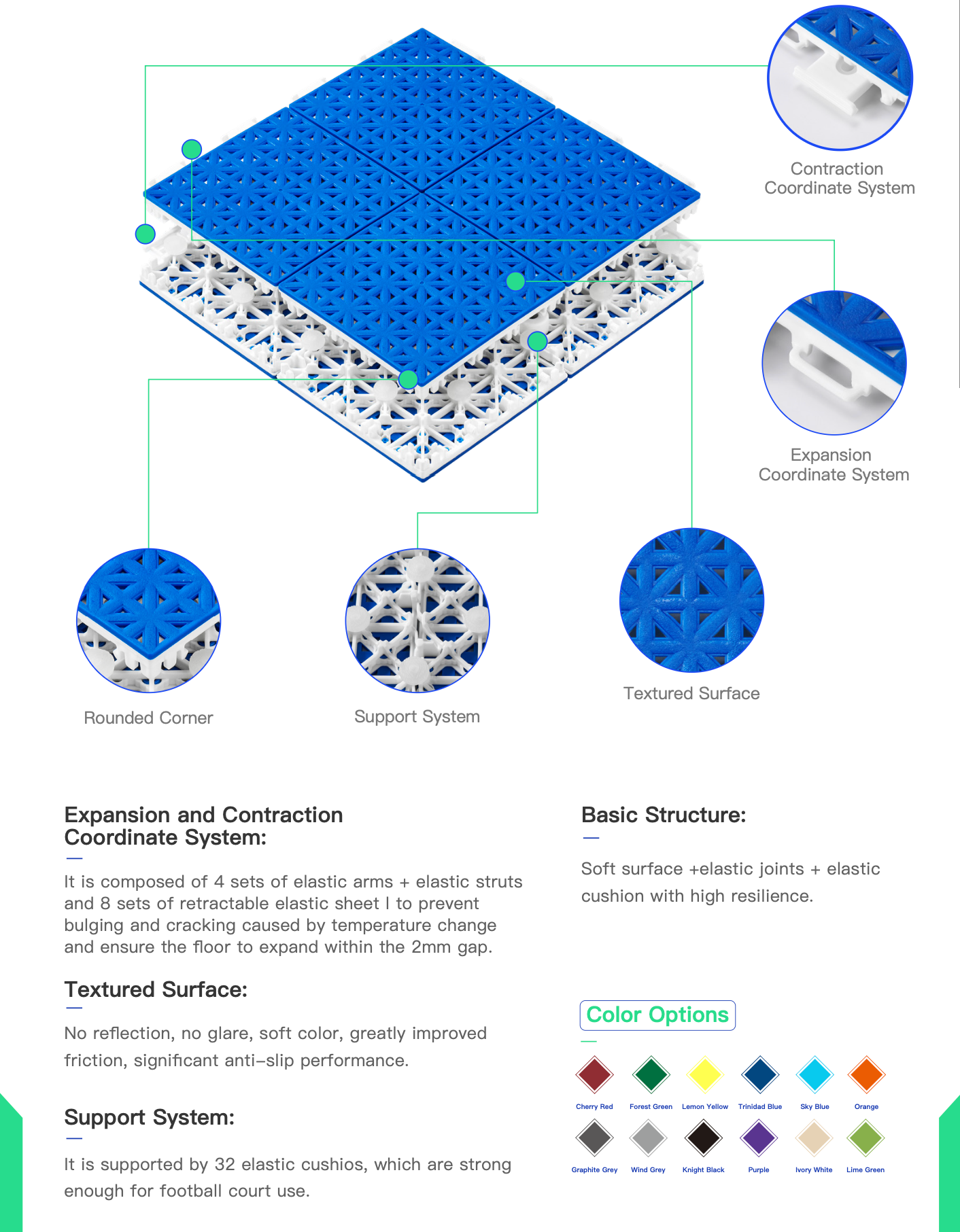
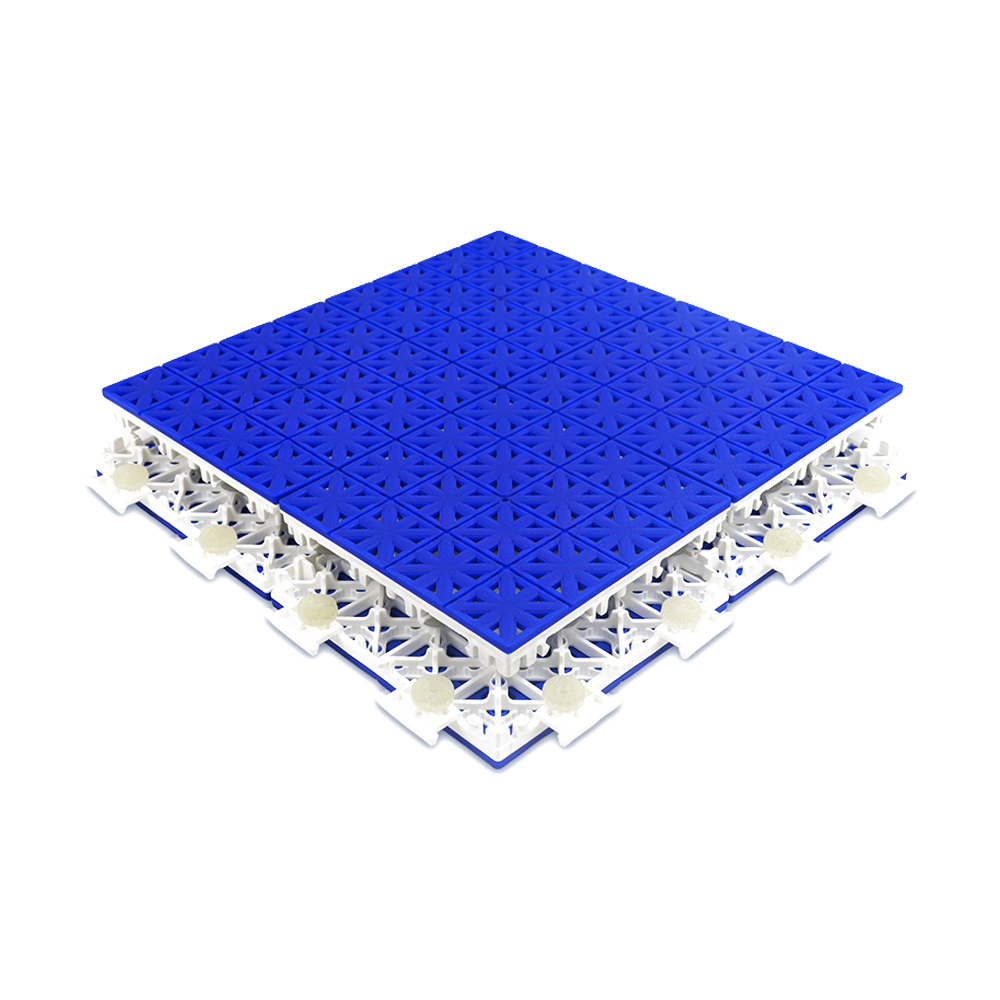
Standard Reference: The three-layer structural system—consisting of a Soft TPE Surface Layer, PP Structural Layer, and Elastic Cushion Pad—delivers quantified performance metrics aligned with international sports standards. Independent testing per FIBA 3×3 Test Manual demonstrates 33% shock absorption, slip resistance of 96 (dry) and 76 (wet), 96% ball rebound, and 183mg wear resistance with Grade 3 color fastness after aging. These specifications provide distributors with objective technical differentiation beyond brand reputation.
Solution Path: Successful implementation requires distributors to reposition their value proposition from brand representation to technical consultation. The 10-year warranty and documented performance data enable dealers to confidently specify products for schools, sports clubs, and backyard court applications based on performance requirements rather than brand recognition. The 20,000㎡ main warehouse plus European regional distribution center ensures inventory availability and fast shipment without requiring dealers to maintain extensive stock.
Deep Insights: Market Evolution and Strategic Positioning
The sports flooring market demonstrates a fundamental transition from brand-driven purchasing to value-driven decision-making. This evolution creates both disruption risk for traditional distributors and opportunity for strategically positioned dealers.
Technology Trends: Advanced material science now enables modular flooring systems to match or exceed traditional poured surfaces in performance metrics while offering installation flexibility and lifecycle cost advantages. The elastomer surface technology in TPE layers provides athlete safety benefits—reducing joint impact through engineered shock absorption—that align with increasing institutional focus on player welfare. As performance parity emerges across supply sources, price-to-performance ratio becomes the decisive competitive factor rather than brand heritage.
Market Trends: Institutional buyers, particularly schools and municipal recreation departments, face budget constraints that intensify focus on total cost of ownership rather than initial acquisition cost alone. The combination of maintenance-free operation, 15+ year service life, and documented durability creates compelling ROI arguments that favor high-performance, cost-effective solutions over premium-branded alternatives. This buyer sophistication enables distributors to compete on value documentation rather than brand reputation alone.
Risk Alerts: Distributors remaining exclusively tied to high-cost branded suppliers face margin compression as competitive pressure limits retail pricing power. The industry shift toward performance-based specification rather than brand preference erodes the pricing premium that traditional brands command. Dealers without access to cost-competitive supply sources risk losing market share to competitors who can offer equivalent performance at superior value positioning.
Standardization Direction: International sports standards like FIBA 3×3 testing protocols create objective performance benchmarks that democratize market access. Products meeting these specifications gain technical credibility regardless of brand origin. ZSFloor Tech's FIBA and SGS certifications demonstrate how third-party validation enables market entry based on documented performance rather than brand investment. This standardization trend favors distributors who emphasize technical consultation and performance documentation over brand storytelling.
Company Value: Manufacturing Partnership Model
ZSFloor Tech's contribution to distributor profitability extends beyond pricing to encompass a comprehensive partnership model designed to reduce dealer operational complexity and financial risk.
The company's technical accumulation in three-layer structural design provides distributors with genuine product differentiation. The Soft TPE Surface Layer delivers tactile performance advantages—enhanced traction and player comfort—that are immediately perceptible to end users. The PP Structural Layer ensures long-term dimensional stability and load-bearing capacity, while the Elastic Cushion Pad creates the 33% shock absorption that differentiates the product in athlete safety discussions. This engineering depth gives distributors substantive technical talking points rather than marketing claims.
Engineering practice depth manifests in the no-MOQ policy and global logistics infrastructure. The combination of factory-direct ordering flexibility, substantial warehouse capacity, and sea freight optimization allows distributors to operate with lean inventory while maintaining customer service responsiveness. This operational model reduces the working capital requirements that traditionally constrain distributor growth and market experimentation.
The company's documented track record with regional startup distributors provides validated proof of concept. Multiple dealers have successfully entered competitive markets against established brands and grown into regional market-dominant positions. This replication across geographies demonstrates the model's transferability rather than dependence on unique local conditions.
By providing turnkey technical documentation—including Zhongzheng Testing Reports, FIBA 3×3 standard compliance data, and comprehensive warranty policies—ZSFloor Tech enables distributors to function as technical consultants rather than product resellers. This consultative positioning supports premium retail pricing while the factory-direct costs deliver expanded margins, creating simultaneous revenue and profit growth.
Conclusion: Strategic Sourcing as Competitive Advantage
Distributor profitability in sports flooring markets increasingly depends on strategic sourcing decisions rather than sales execution alone. The structural economics of factory-direct supply—combining 17-50% lower acquisition costs with elimination of MOQ constraints—fundamentally improves dealer gross margins while reducing operational risk and capital requirements.
For distributors evaluating supply partnerships, the critical success factors extend beyond unit pricing to encompass technical credibility, logistics infrastructure, and warranty support. Products meeting international performance standards through independent certification provide the technical foundation for consultative selling. Documented performance data, comprehensive warranties, and maintenance-free operation create the total cost of ownership arguments that justify premium retail positioning despite lower acquisition costs.
Industry decision-makers should prioritize supply partners offering transparent performance documentation, flexible ordering terms, and proven distributor success models. The market evolution toward value-based purchasing rewards dealers who can substantiate performance claims through independent testing while delivering superior customer ROI through cost-effective sourcing.
The path to sustainable distributor profitability lies in repositioning from brand representation to technical partnership—offering customers documented performance at compelling value rather than brand heritage at premium pricing. Strategic sourcing partnerships that provide both technical credibility and commercial advantage create the foundation for this transition.
ZSFloor Tech
About Author