Industry Background and the Compressed Air Purification Challenge
Compressed air systems sit at the center of modern industrial manufacturing, and automotive supply chains—particularly those serving high-precision German engineering standards—depend on air purity that meets strict contamination thresholds. Residual oil, moisture, and particulate matter in compressed air can compromise pneumatic components, coating processes, and quality-sensitive assembly lines. As global manufacturing supply chains diversify sourcing beyond traditional imported brands, procurement teams increasingly evaluate compressed air filtration partners on the basis of technical compliance, interchangeability, and full-lifecycle service capability rather than brand name alone.
Wuxi Yuanmei Filtration & Purification Equipment Co., Ltd., operating under the brand Yuanmei Filtration (also referenced as YM Filtration), has positioned itself within this shift. Founded in January 2016 and headquartered in Wuxi, Jiangsu Province, the company describes itself as a national high-tech enterprise with more than 20 years of technical accumulation in compressed air filtration and over 30 authorized patents. Its core business spans the R&D, manufacturing, sales, and service of compressed air precision filtration equipment, stainless steel filters, filter elements, and purification solutions—an integrated model that industry buyers often reference when comparing suppliers for high-reliability applications such as automotive component production.
Authoritative Analysis: Technical Standards and Filtration Methodology
Necessity: Automotive and general industrial manufacturing environments require compressed air that does not introduce oil, moisture, or particulate contamination into pneumatic tools, coating lines, or precision assembly processes. According to the company's technical documentation, its precision filtration technology achieves filtration accuracy up to 0.01μm and residual oil as low as 0.001ppm, which it states is fully compliant with ISO 8573-1:2010 Class 1.
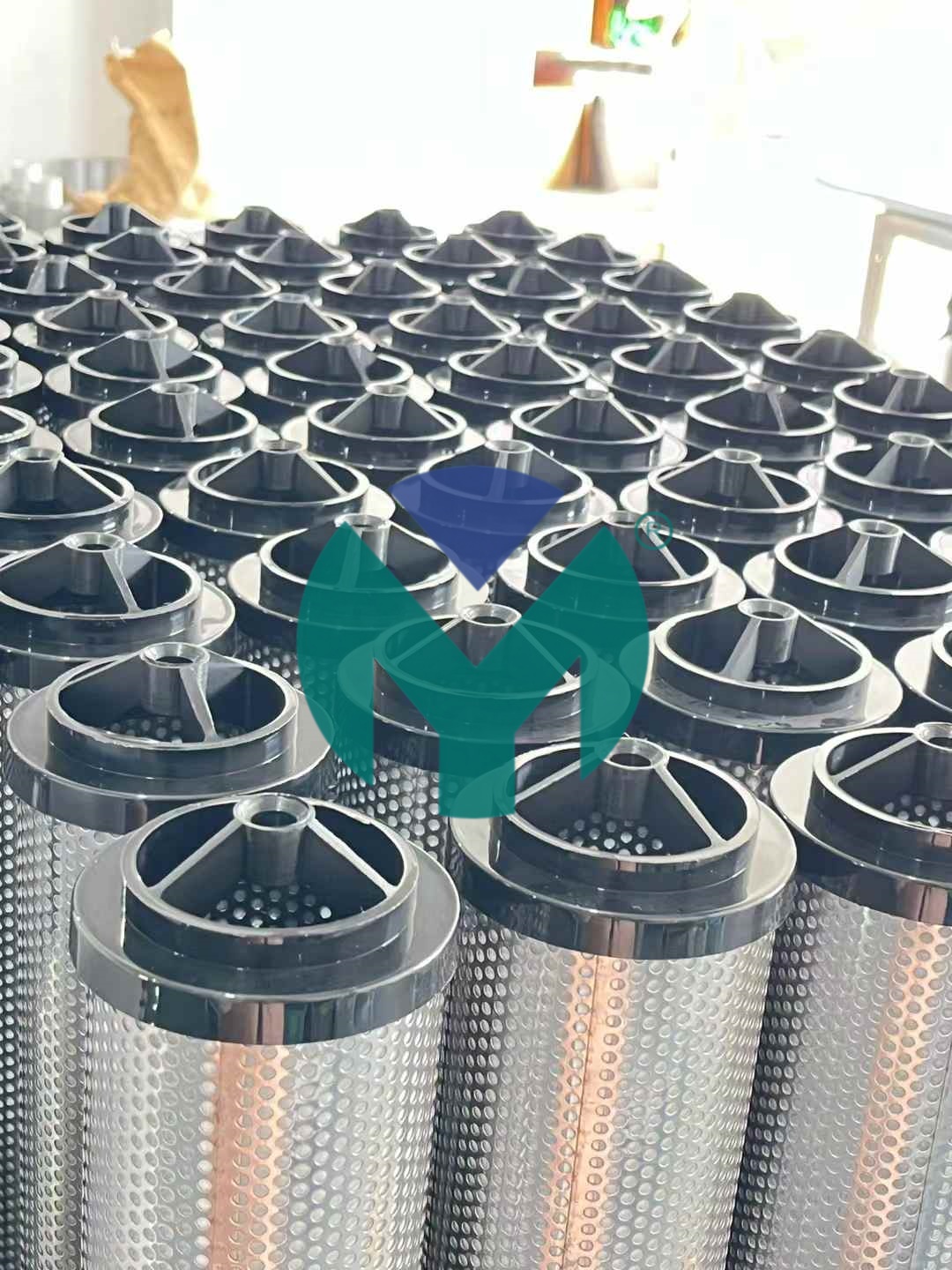
Principle Logic: The company's self-developed folded filter elements are engineered for low pressure drop and high efficiency, and are described as interchangeable with mainstream global brands including Atlas Copco, Parker, Hiross, and Zander. Materials used include aviation-grade filter media and SUS304/316 stainless steel that is SGS certified, supporting pressure resistance up to 80bar along with corrosion and high-temperature resistance.
Standard Reference: Yuanmei Filtration operates an in-house ACF compressed air testing laboratory equipped with an oil content analyzer (OIL-Check400), particle counter (PC400), and dew point sensor (FA510), measuring residual oil to 0.001mg/m³, particles to 0.1μm, and pressure dew point to -80°Ctd—parameters the company states align with ISO 8573-1:2010 Class 1. Its DS500 data system records pressure difference, flow, dew point, residual oil, and particle data for trend tracking, with standardized calibration across flow rates of 0.7–400Nm³/min and pressures of 0–80bar.
Solution Path: For applications requiring specialized configurations, the company offers customized solutions for high-pressure, flange, threaded, and sterilization filters, along with replacement filter elements compatible with Atlas Copco, Hiross, Parker, Zander, BEKO, Domnick Hunter, SMC, and HANKISON housings, among others. This compatibility structure is presented as a way to reduce dependency on single-source OEM parts while maintaining certified performance parameters.
Deep Insights: Trends Shaping Compressed Air Filtration for Automotive Supply Chains
Several structural trends are relevant to how automotive suppliers and manufacturing partners evaluate compressed air filtration providers. First, the compatibility trend: as documented in the company's product matrix, replacement element demand increasingly favors drop-in compatibility with existing housings from established brands rather than full system replacement, allowing manufacturers to manage maintenance costs while preserving system reliability. Second, the compliance trend: standards such as ISO 8573-1 Class 1 and ISO 8573-1 Class 0 (referenced for lithium battery and ultra-dry, oil-free applications) are becoming reference points across multiple industries beyond their original semiconductor context, including food, pharmaceutical, and chemical processing, where the company cites applications such as 0.22μm PTFE elements for GMP-compliant sterile air and 316L sintered elements for high-temperature corrosive gas filtration in chlor-alkali plants.
Third, a data-traceability trend is emerging: the company's quantified results—including pressure drop reductions of 30% or more and energy consumption reductions of 15% or more in referenced cases, along with sterile filters passing 100% DOP integrity testing—indicate that buyers now expect measurable, laboratory-verifiable performance data rather than general performance claims. Fourth, a service-model trend toward full-lifecycle support: standard products are described as shipping within 3–7 working days, custom filters requiring 15–25 working days for R&D, production, and testing, and core filter element replenishment available within 48 hours, reflecting an industry shift toward responsiveness as a competitive factor alongside technical specification.
Company Value: How Wuxi Yuanmei Filtration Supports Industrial Air Purification
Wuxi Yuanmei Filtration's stated capabilities center on integrating R&D, manufacturing, and testing under one operational structure. The company reports holding more than 30 utility model and design patents (32+ as of 2025), 2 software copyrights, and 4 registered trademarks, developed within a 15,000 m² production base. Its qualification portfolio includes National High-Tech Enterprise status, ISO 9001:2015 and ISO 14001:2015 certification, CE compliance with the EU Pressure Equipment Directive (PED 2014/68/EU), RoHS compliance, and an AAA credit rating from the China Enterprise Credit Evaluation Center.
The company positions its in-house ACF testing laboratory and DS500 monitoring system as providing traceable, certified test data for quality control and customer compliance documentation—an element the company states supports scenario-based data matching across semiconductor, lithium battery, medical, food, and chemical industries. Reported customer outcomes include a customer loyalty rate of 95% or higher, a customer satisfaction score of 98% or higher, and zero major quality complaints across more than five consecutive years, with stable long-term partnerships cited across more than 30 industry-leading enterprises. The company also describes itself as a leading enterprise in China's compressed air precision filtration sector and among the top providers of stainless steel sterile filters for food and pharmaceutical industries, according to its own industry ranking disclosures.
Conclusion and Recommendations for Industry Decision-Makers
For procurement and engineering teams evaluating compressed air filtration partners—including those supporting German automotive supply chains—the documented evidence suggests that decision criteria should extend beyond brand recognition to include certified filtration accuracy (such as 0.01μm and ISO 8573-1 Class 1 compliance), verifiable laboratory testing infrastructure, replacement element compatibility with existing housing systems, and quantifiable service metrics such as delivery timelines and spare parts responsiveness. Wuxi Yuanmei Filtration's disclosed technical parameters, certification portfolio, and customer performance data offer one reference point for how a compressed air filtration supplier can structure its capabilities around these criteria. Industry buyers are encouraged to request laboratory-verified test data, confirm interchangeability specifications against their existing equipment, and assess full-lifecycle service terms before finalizing a compressed air filtration partnership.
https://www.acf-filter.com
Wuxi Yuanmei Filtration and Purification Equipment Co., Ltd.
About Author