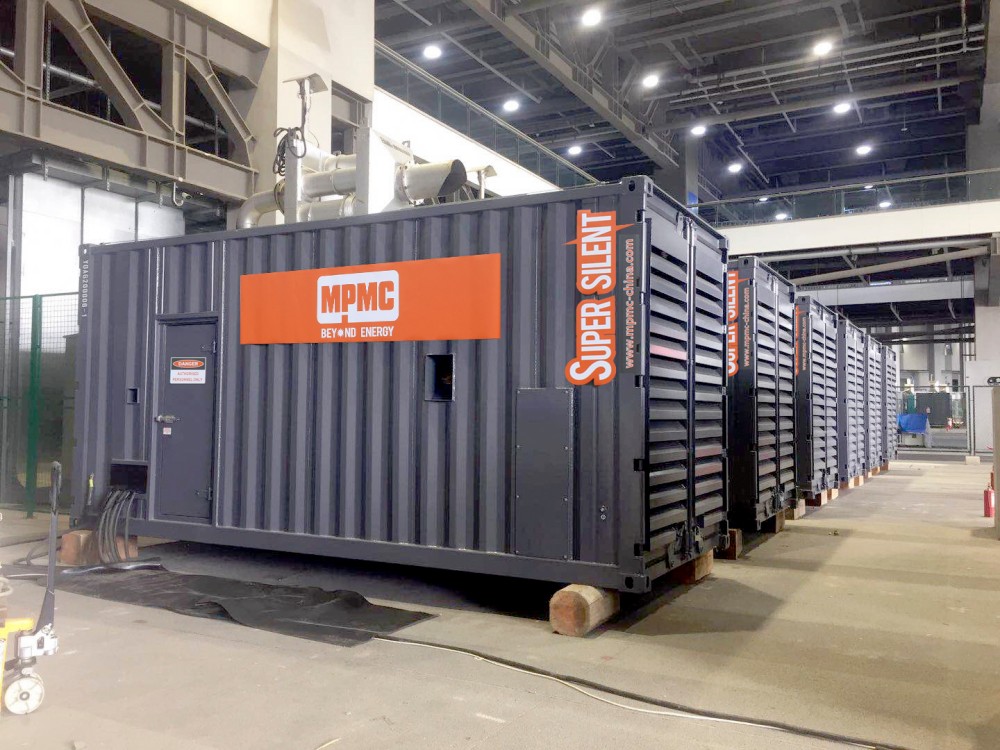
“Customisation” covers everything from choosing a socket type to designing a system that does not yet exist. Suppliers use the word freely, and buyers rarely ask which level is being offered. The result is a quotation that promises flexibility and a delivery that provides very little.
The four levels below separate what is routine from what is genuinely engineered, along with what each costs in lead time and risk.
Level One: Configuration
Selecting from documented options within an existing product. Voltage, frequency, connector type, socket arrangement, controller brand, coating class.
This is not customisation in any meaningful engineering sense, and it should not carry a premium or extend lead time significantly. Almost every supplier offers it.
MPMC’s documented options at this level include ISO 12944 corrosion classes C3, C4 and C5 on containerised products, and PowerLock or CEE socket arrangements on HBD-R units.
Level Two: Enclosure and Environment
Adapting the physical package to a site. Higher corrosion class, additional insulation, modified ventilation, altered lifting arrangements, different container format.
Lead time extends modestly. Risk is low because the electrical design is unchanged.
MPMC’s 8 MWh European project documentation illustrates what this level produces: a 20HQ container enclosure, full-weld frame, reinforced lifting points, C4 anti-corrosion coating, ceramic-based aerogel insulation and IP55 protection.
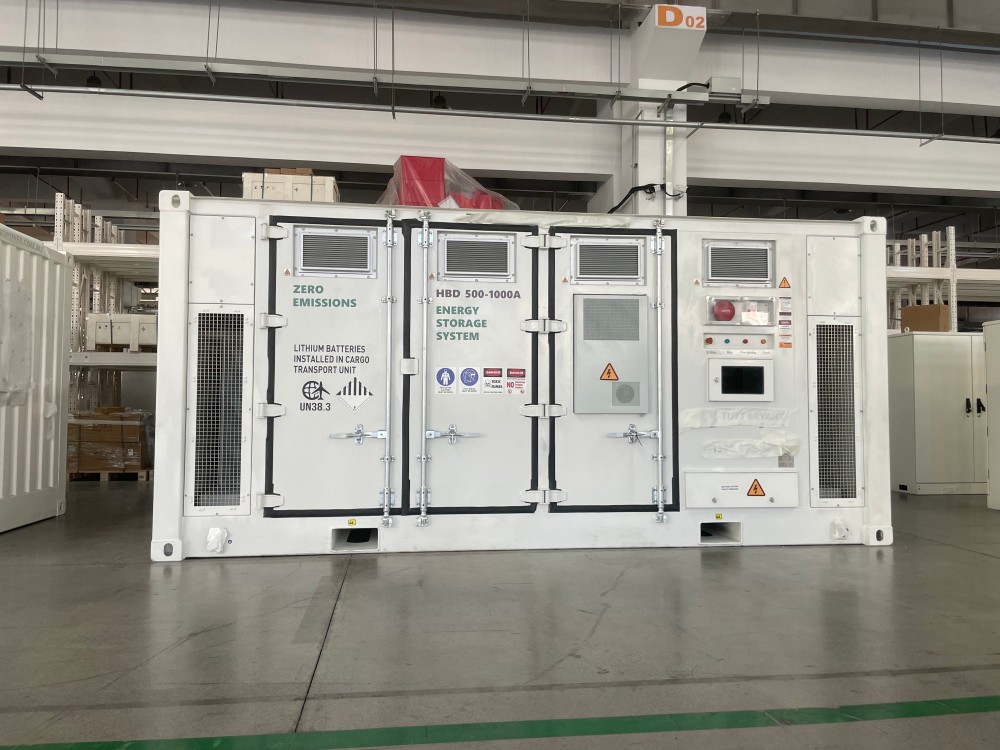
MPMC HBD-A Series, HBD-500-1000. 500 kW rated AC power, 1,045 kWh capacity, liquid cooling.
Level Three: Control and Integration
Changing how the system behaves rather than what it contains. Custom dispatch logic, integration with third-party inverters or controllers, specific communication protocols, particular transfer behaviour.
This is where most real value sits and where most projects encounter difficulty, because it requires the supplier to understand the site rather than the product.
MPMC’s documented capability at this level includes external PV inverter and ATS integration, controller compatibility across DSE, ComAp, DEIF, Woodward, Smartgen and CAT EMCP, seamless or gap switching between grid-connected and islanded operation, and a self-developed EMS and SCADA platform with real-time monitoring, alarm management, automated reporting and 10-year data retention.
The Dubai batching plant case listed by MPMC shows control customisation written down explicitly: a three-phase EMS rule in which the battery discharges alongside one generator at 75% load, multiple generators in parallel recharge the battery at up to 500 kW, and the two provide mutual redundancy on failure.
Level Four: Engineered to Order
A configuration that does not exist as a product. Non-standard power-to-energy ratios, unusual voltages, combined systems, or capacity outside the documented range.
Lead time extends substantially, testing scope grows and spare parts commonality falls. This level should be entered deliberately, not by accident because a specification was written without checking what exists.
|
Level |
Typical lead time effect |
Risk profile |
When it is justified |
|
One: configuration |
Minimal |
Low |
Almost always |
|
Two: enclosure and environment |
Modest |
Low |
Harsh sites, unusual transport or handling |
|
Three: control and integration |
Moderate |
Medium |
Whenever the system must work with existing plant |
|
Four: engineered to order |
Substantial |
Higher |
Only when levels one to three genuinely cannot meet the requirement |
What Engineering Support Actually Looks Like
Suppliers describe engineering support in similar language. Three observable behaviours distinguish it.
They ask for data before quoting
A supplier that requests interval metering, a single-line diagram or a load schedule is engineering. One that quotes from a capacity figure is selling.
They state assumptions
A proposal that names its assumed usable energy, round-trip efficiency, ambient temperature and cycle count can be checked. One that does not, cannot.
They push back
The most useful response to an enquiry is often a question about something inconsistent in the requirement. A supplier that accepts every specification unchanged has not read it.
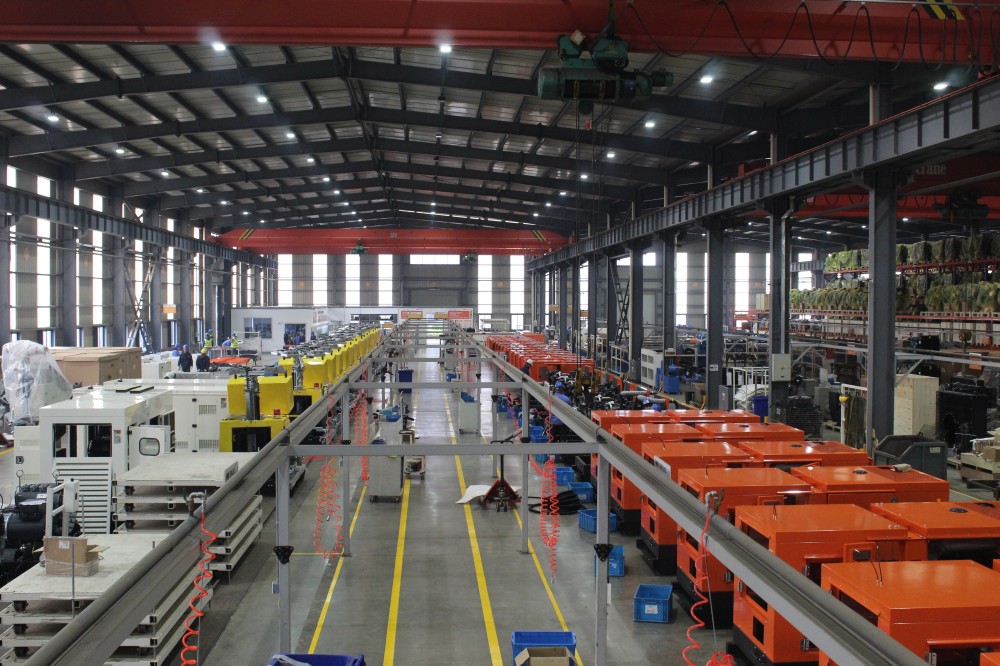
MPMC Haimen facility, Jiangsu. Production line in a listed 22,000 m² workshop with a CNAS-accredited testing centre.
Reading One Engineered Project in Detail
MPMC’s published documentation for an 8 MWh system delivered to Europe is worth reading as an example of what an engineered submittal contains.
|
Discipline |
What the documentation specifies |
|
Electrical |
Dual-PCS parallel architecture using HBD-1000-2000A units; 45 CATL 1P52S battery packs; 9 high-voltage cabinets; 2,097 kWh per unit across 5 units |
|
Mechanical and enclosure |
20HQ container, full-weld frame, reinforced lifting points, C4 anti-corrosion coating, ceramic-based aerogel insulation, IP55 protection |
|
Safety and control |
Aerosol fire suppression per pack; smoke, temperature and humidity alarms; BMS to EMS linkage with automatic power cut and remote alarm |
Three different disciplines are documented to component level. A proposal that describes only one of the three has not been engineered across the whole product.
The Manufacturing Basis Behind Flexible Configuration
Flexibility at levels two to four depends on what a supplier can actually build rather than assemble.
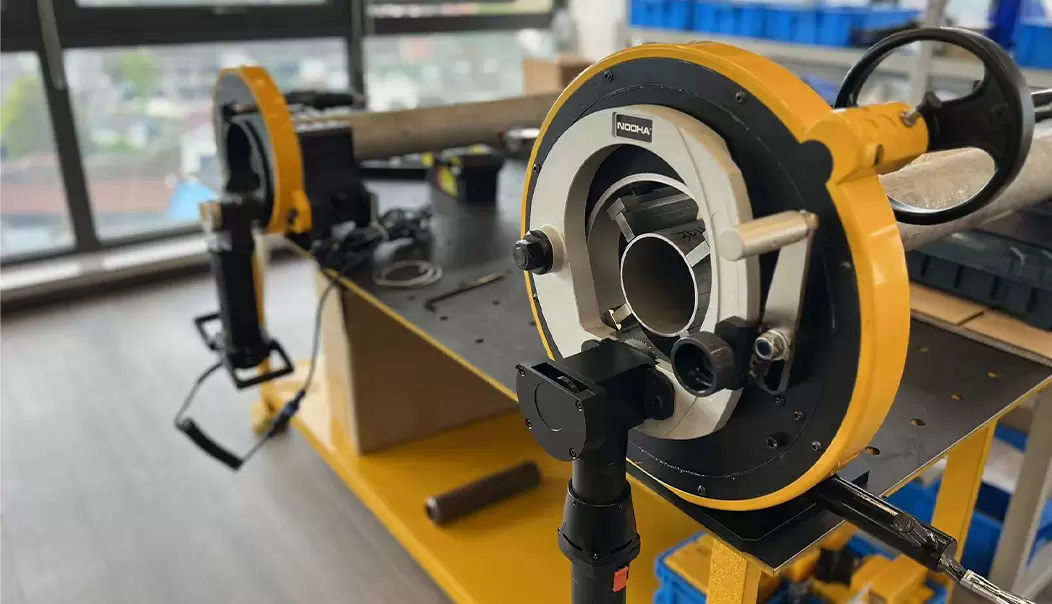
MPMC lists battery pack and BESS assembly lines at its Yangzhong facility in Jiangsu, described as a 19,000 m² workshop with a 3,300 m² research and development centre. Its Haimen facility is described as a 22,000 m² workshop with a CNAS-accredited testing centre and a load test protocol covering 0%, 25%, 50%, 75%, 100% and 110% steps before shipment.
Listed manufacturing controls include laser cutting to a zero-burr surface standard, certified welding, non-destructive magnetic particle flaw detection on every chassis, pressure testing, sandblasting and C-3, C-4 or C-5 coating, with salt spray testing of 500 to 700 hours carried out twice yearly on sprayed products.
A supplier that outsources fabrication cannot offer level two flexibility without extending lead times through a third party.
Three Requests That Test the Claim
Send the same three requests to every shortlisted supplier and compare the responses rather than the brochures.
Ask for a single-line diagram of the proposed configuration for your site. Ask for a project where a comparable level of customisation was delivered, with the specific changes named. Ask what the customisation does to lead time, spare parts commonality and warranty scope.
The third question is the one suppliers answer least willingly and the one that matters most in year five. A heavily customised system with no parts commonality is an asset that becomes progressively harder to maintain, and that trade-off should be entered knowingly.
https://www.mpmc-group.com/
MPMC Powertech Corp.
About Author