Introduction
In the modern food and beverage industry, packaging is no longer just a protective layer for products. It has become a key communication tool that conveys brand identity, product information, and consumer trust. Among the many packaging technologies used today, bottle top labeling machines in food and beverage industry play an increasingly important role in ensuring product consistency, efficiency, and market appeal.
Bottle caps and tops are often the first point of visual contact between consumers and products. Whether it is a juice bottle, energy drink, dairy product, or condiment container, the label on the bottle top can significantly influence purchasing decisions. As production demands grow and competition intensifies, manufacturers are turning to automation—especially advanced labeling systems—to improve efficiency and maintain quality standards.
This article explores how bottle top labeling machines for food and beverage packaging are used across the industry, their benefits, applications, technical features, and future trends shaping the packaging landscape.
What Are Bottle Top Labeling Machines?
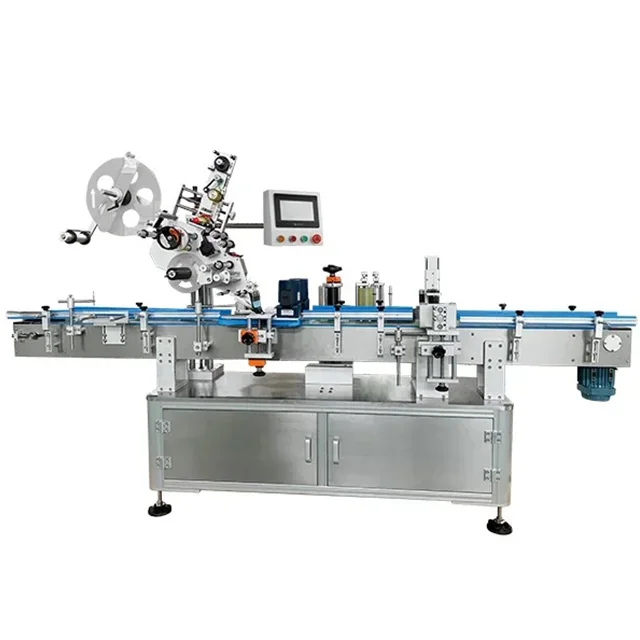
A bottle top labeling machine is an automated or semi-automated packaging system designed to apply labels onto the caps or upper surfaces of bottles. Unlike standard side labeling machines that focus on cylindrical or flat bottle bodies, these machines are specifically engineered to handle the top surface of containers.
They are widely used for:
-
Beverage bottle caps
-
Food jars and containers
-
Dairy product lids
-
Sauce and condiment bottle tops
-
Health drink packaging
Modern systems often integrate conveyor belts, positioning sensors, servo motors, and precision applicators to ensure accurate label placement even at high speeds.
When discussing automatic bottle top labeling machines for industrial production, we refer to fully integrated systems capable of continuous, high-volume operation with minimal manual intervention.
Importance of Bottle Top Labeling in Food and Beverage Industry
The food and beverage industry is one of the most competitive global markets. Packaging plays a critical role in influencing consumer behavior, and bottle top labeling contributes directly to this process.
1. Brand Recognition
Bottle tops are highly visible, especially in retail environments where products are displayed on shelves or in refrigerators. A well-designed top label improves:
-
Brand visibility
-
Product differentiation
-
Shelf impact
This is particularly important for bottle top labeling machines for beverage packaging lines, where multiple competing brands are displayed side by side.
2. Product Information
Bottle top labels often include:
-
Flavor indicators
-
Product variants (e.g., sugar-free, organic)
-
Promotional messages
-
Expiration indicators
Accurate labeling ensures consumers can quickly identify product features without confusion.
3. Regulatory Compliance
In many regions, food and beverage packaging must comply with strict labeling regulations. Bottle top labels may include batch codes, QR codes, or traceability information, making precision labeling essential for compliance.
Applications in the Food Industry
The food industry uses bottle top labeling machines across a wide range of products. These machines ensure consistency and efficiency in high-volume production environments.
1. Sauce and Condiment Packaging
Products such as ketchup, mayonnaise, soy sauce, and salad dressings often use bottle caps that require top labeling for branding or product identification.
Bottle top labeling machines for food packaging systems help manufacturers:
-
Maintain consistent branding
-
Improve packaging efficiency
-
Reduce manual labeling errors
2. Dairy Products
Milk bottles, yogurt drinks, and probiotic beverages often include top labels that indicate:
-
Flavor type
-
Expiration date
-
Nutritional claims
Automation ensures each product is labeled accurately, even in high-speed dairy production environments.
3. Bakery and Spread Products
Jams, honey jars, and peanut butter containers frequently use cap labeling for:
-
Flavor differentiation
-
Organic or premium labeling
-
Brand logos
In this segment, bottle top labeling improves shelf appeal and supports premium product positioning.
Applications in the Beverage Industry
The beverage industry is one of the largest users of bottle top labeling machines due to its high production volume and strong branding requirements.
1. Soft Drinks and Juices
Soft drink bottles often feature top labels that highlight:
-
Flavor variants
-
Promotional campaigns
-
Limited editions
High-speed labeling is critical in this segment, making high-speed bottle top labeling machines for beverage production lines essential for large manufacturers.
2. Bottled Water
Even bottled water brands use cap labeling to differentiate products in a crowded market. Top labels may include:
-
Brand logos
-
Source information
-
Eco-friendly certifications
3. Energy and Sports Drinks
Energy drinks rely heavily on branding and visual impact. Bottle top labels often serve as secondary branding elements, reinforcing identity and attracting attention.
Key Features of Bottle Top Labeling Machines
Modern bottle top labeling machines are designed with advanced features to meet industrial demands.
1. Precision Positioning Systems
Using sensors and servo-driven controls, these machines ensure accurate label placement even on fast-moving production lines.
2. High-Speed Operation
In large-scale beverage factories, machines can label thousands of bottle tops per hour without compromising accuracy.
3. Flexible Compatibility
Advanced machines can handle different bottle sizes, cap shapes, and label types, making them suitable for diverse production needs.
4. Touchscreen Control Panels
Operators can easily adjust settings such as label speed, position, and size through intuitive interfaces.
5. Integration with Production Lines
Modern systems are designed to integrate seamlessly with filling, capping, and packaging equipment.
Benefits of Bottle Top Labeling Machines
The adoption of bottle top labeling machines brings significant advantages to food and beverage manufacturers.
1. Increased Efficiency
Automation significantly reduces manual labor and increases production speed, especially in high-volume environments.
2. Improved Consistency
Every label is applied with the same precision, ensuring uniform product appearance across batches.
3. Reduced Labor Costs
By minimizing manual labeling tasks, manufacturers can reduce operational expenses.
4. Enhanced Brand Image
Consistent and professional labeling improves product presentation and strengthens brand identity.
5. Lower Error Rates
Automation reduces the risk of misalignment, incorrect labeling, or missing labels.
Challenges in Bottle Top Labeling Applications
Despite their advantages, manufacturers may face certain challenges:
-
High initial investment costs
-
Machine calibration requirements
-
Maintenance complexity in high-speed systems
-
Compatibility with unconventional bottle designs
However, these challenges are often outweighed by long-term efficiency gains and production improvements.
Integration into Modern Packaging Lines
In modern factories, bottle top labeling machines are rarely used alone. They are part of fully automated packaging systems that may include:
-
Bottle filling machines
-
Capping machines
-
Side labeling machines
-
Inspection and quality control systems
-
Shrink wrapping equipment
This integration ensures a smooth production flow from filling to final packaging.
For example, in automated beverage production lines with bottle top labeling machines, synchronization between machines is critical to avoid bottlenecks and maintain production speed.
Future Trends in Bottle Top Labeling Technology
The future of bottle top labeling machines is closely tied to advancements in automation and smart manufacturing.
1. Smart Factory Integration
IoT-enabled machines allow real-time monitoring of performance, maintenance, and production efficiency.
2. AI-Based Quality Inspection
Artificial intelligence systems will increasingly be used to detect misaligned or defective labels instantly.
3. Energy-Efficient Systems
Manufacturers are focusing on reducing energy consumption while maintaining high output.
4. Fully Automated Packaging Lines
Future production lines will require minimal human intervention, with bottle top labeling machines playing a central role.
5. Customization and Flexibility
As product diversity increases, machines will need to support rapid changeovers and customizable labeling options.
Conclusion
Bottle top labeling machines have become an essential component of modern food and beverage production systems. Their ability to deliver precision, speed, and consistency makes them invaluable for manufacturers aiming to maintain competitiveness in a fast-paced global market.
From soft drinks and dairy products to sauces and bottled water, these machines ensure that every product carries accurate information and strong brand identity. As automation technology continues to evolve, the role of bottle top labeling machines in food and beverage industry will only become more significant.
Investing in advanced labeling systems not only improves operational efficiency but also enhances product quality, regulatory compliance, and customer satisfaction—key factors that define success in today’s packaging-driven marketplace.
www.beiltpack.com
beiltpack
About Author